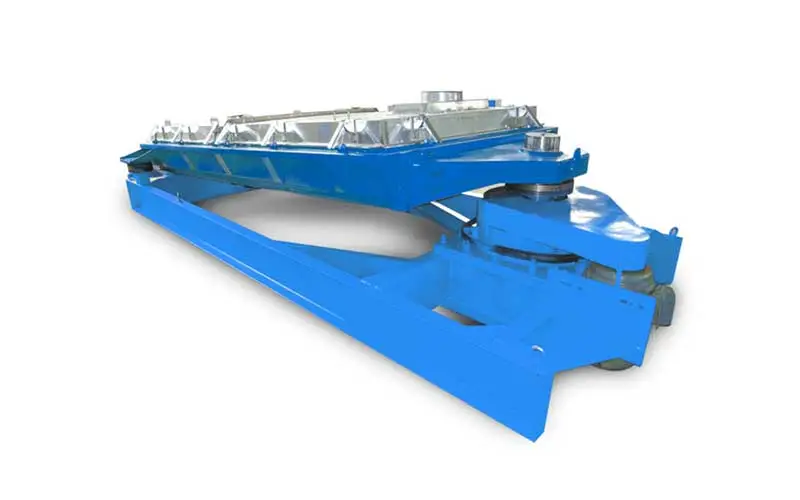
Screen blinding and clogging are among the biggest productivity killers in high‑moisture material screening—especially when sticky fines, agglomerates, or uneven feed conditions quickly block apertures and choke throughput. In this guide, we’ll break down why blinding happens, how to diagnose the root cause, and which practical fixes work in real plants—then show how choosing the right rectangular separator (a type of vibrating screen machine) can help maintain stable screening performance in wet and hard‑to‑screen materials.
Rectangular Separator vs. Moisture-Driven Blinding: What's Really Happening on the Screen Deck
Blinding happens when fine particles adhere to screen wires, reducing open area and flow—while clogging involves full blockages from buildup. In high-moisture scenarios, the "moisture + fines" combo triggers capillary bridging (wet particles fuse), paste-like coatings, or near-size pegging where sticky bits wedge in.
Quick diagnostic checklist: Spot the issue fast to fix it.
| Symptom | Likely Cause | Quick Check | First Fix to Try |
|---|
| Paste layer across mesh | Excess moisture + fines | Measure % moisture | Pre-dry or reduce feed |
| Wedged particles | Pegging from near-size | Compare PSD to aperture | Larger aperture trial |
| Thick material bed | Overloading/poor distribution | Observe bed depth | Even out feed spread |
| Sticky film on wires | Fouling (oils/clays) | Wipe test on sample | Anti-blind media |
Vibrating Screen Machine Setup Tips for High‑Moisture Screening (Reduce Blinding Fast)
Tackle blinding with these vibrating screen machine tweaks—start process-side for quick ROI:
Feed control: Use metering feeders for steady rates (70-80% load); distribute evenly to avoid hot spots.
Screening strategy: Pre-scalp lumps upstream; go multi-stage (coarse → fine) instead of one-pass ultrafines.
Screen media: Match aperture to wet PSD (e.g., 10-20% larger); prioritize high open area or anti-blinding profiles like urethane modules.
Operating SOP: Startup slow (build bed gradually); inspect every 2 hours; clean with brushes/vacuum (no harsh water on fines).
Quick Wins in 30 Minutes:
Drop feed rate 20%—watch capacity rebound.
Verify no moisture spikes (probe upstream).
Check screen tension and bed depth.
Test dry brushing between runs.
Choosing a Rectangular Separator for Wet Materials: Features to Look For in a Vibrating Screen Machine
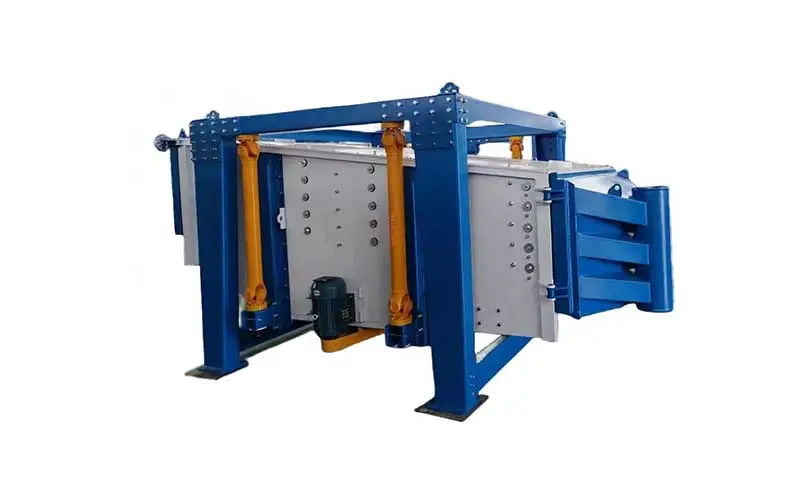
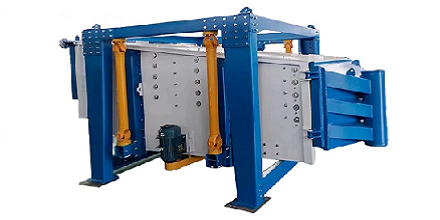
Rectangular separators shine for wet materials thanks to their wider screening area for superior feed distribution (less local plugging), stable linear motion for even stratification of sticky feeds, and compact integration into continuous lines. Look for:
Wet-operation ready: Enclosed decks with mist containment and easy-drain outlets.
Configurable controls: PLC for vibration tuning (amplitude/angle), stable startup to prevent initial surges.
Maintenance perks: Quick-access decks, modular screens for fast changeovers in multi-product plants.
Ideal for mining, chemicals, food, or recycling wet slurries.
Conclusion
Blinding is rarely one thing—it's moisture + fines + uneven feed + mismatched media + ops habits. Fix the process first (feed/moisture control), then align your rectangular separator config to wet-material realities for reliable throughput and quality.
If you’re screening high‑moisture material and want a more stable approach, review our rectangular separator options and share your material specs (moisture %, cut size, capacity) for a configuration suggestion.
FAQ
What is screen blinding in high‑moisture material screening?
Screen blinding occurs when wet fines stick to mesh wires via capillary action, blocking flow and reducing capacity in vibrating screen machines.
How do I stop clogging without changing my product specification?
Stabilize feed rate, use anti-blinding media, and tune vibration—quick tests like reducing surges often restore 20-30% throughput.
Which screen mesh or deck option is best for sticky, wet fines?
High open-area profiles (urethane modules or larger apertures) with self-cleaning features; pair with multi-stage for precision.
Can a rectangular separator handle wet materials better than other screen types?
Yes—its wide deck ensures even distribution and stable motion, minimizing plugs in high-moisture feeds vs. round designs.
What operating changes reduce blinding on a vibrating screen machine fastest?
Steady feed (no dumps), slow startups, and 2-hour inspections; log moisture to spot trends.
What information should I provide to size a rectangular separator (capacity, moisture, cut size, bulk density)?
Target throughput (kg/h), moisture %, PSD/cut size, bulk density, and material traits (sticky/abrasive) for accurate config.
By Carson Zhao
The Founder of Tvtion Machinery Tech.
With more than 15 years of deep-rooted expertise in powder applications, I am Carson Zhao, the founder of Tvtion Machinery Tech, a company dedicated to delivering innovative and high-efficiency solutions for powder handling, mixing, screening, and processing across industries. My passion lies in solving complex powder-related challenges—whether in pharmaceuticals, food, chemicals, plastic, metal powder, etc. —by leveraging cutting-edge technology and hands-on industry experience.
Let's collaborate to transform your powder processes into a competitive advantage.
 EN
EN