The lithium-ion battery supply chain is exploding, with global gigafactory capacity projected to triple by 203. This rapid scale-up demands ultra-tight quality windows for cathode and anode powders—where even minor inconsistencies in particle size distribution (PSD) can trigger yield drops, rework, or full batch rejections. Precision sifting using a rectangular separator, a reliable vibrating screen machine, emerges as a key process control to tackle these challenges. In this post, battery materials and process engineers will learn where screening fits in the supply chain, the pain points it solves, what "precision" really means, why rectangular separators excel, and a practical selection and validation guide. Discover how to turn powder classification into a yield-boosting CCP (critical control point).
Where Screening Happens in Battery Materials Processing
Precision sifting isn't optional—it's integrated at multiple stages to ensure PSD control and defect prevention. Here's a simplified workflow diagram highlighting key checkpoints:
Raw Material Receiving (e.g., NMC precursors, graphite)
          ↓
Incoming QC Screening (foreign matter, oversize)
          ↓
Milling / Micronization / Deagglomeration
          ↓
**Precision Sifting (post-milling: PSD tightening)**
          ↓
Blending / Doping
          ↓
**Precision Sifting (pre-blending: agglomerate removal)**
          ↓
Slurry Prep / Coating / Calendaring
          ↓
Electrode Production → Cell Assembly
          ↓
**Precision Sifting (pre-packaging: final QA)**
Common insertion points:
Raw receiving: Catches contaminants early.
Post-milling: Removes oversize tails (80% of use cases).
Pre-blending: Ensures flowable powders for stable mixing.
Pre-shipping: Guards against foreign matter in final product.
The Hidden Costs of Poor Powder Classification
Skipping or underperforming screening amplifies risks downstream:
Oversize particles/agglomerates: Cause coating defects, uneven electrode layers, and calendaring issues—leading to capacity loss or cell failures.
Inconsistent PSD: Drives batch-to-batch variation, disrupting mixing uniformity and powder flow in hoppers/feeders.
Foreign matter (metals, fibers): Triggers lot rejections, extra QC testing, or costly rework under IATF 16949 standards.
Operational bottlenecks: Screen blinding reduces throughput, spikes downtime, and erodes OEE.
Symptoms Checklist:
Frequent slurry streaks or electrode defects.
Rising reject rates (>2% oversize).
Unstable bulk density in blending.
Increased cleaning cycles (daily+).
These pains compound into millions in losses for high-volume lines.
What Precision Sifting Actually Means (In Practical Terms)
Precision sifting goes beyond basic sieving—it's about reliable, repeatable classification for battery-grade powders:
Separation accuracy: Consistent cut sizes (e.g., d50 at 10-20 microns) with minimal tailing.
Throughput stability: Steady 500-500 kg/h without stoppages.
Low contamination: Food-grade or pharma-compliant contact materials, sealed transfers.
Repeatability: Identical PSD across shifts via tuned vibration and tensioning.
Key Metrics:
Oversize percentage (<0.5-1%).
Yield loss/rework rate (target <2%).
Downtime from blinding/cleaning (<5% of runtime).
Rejection/complaint rate (batch pass >99%).
Track these to quantify screening as a CCP.
Why Choose a Rectangular Separator vs Other Screening Options
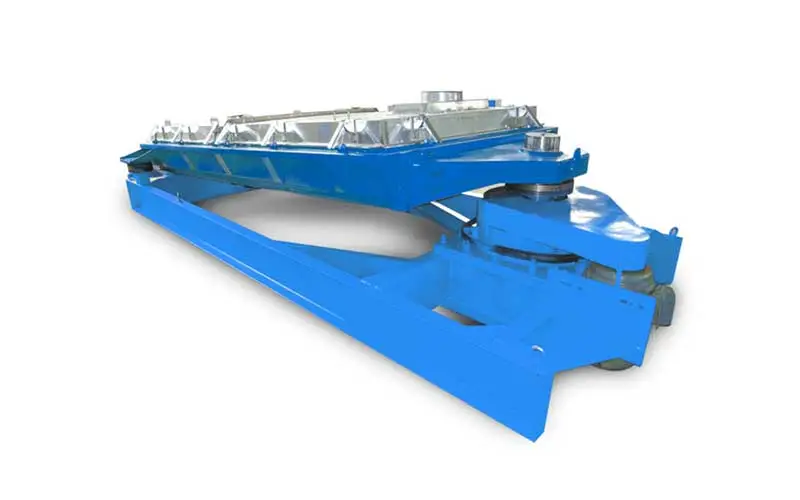
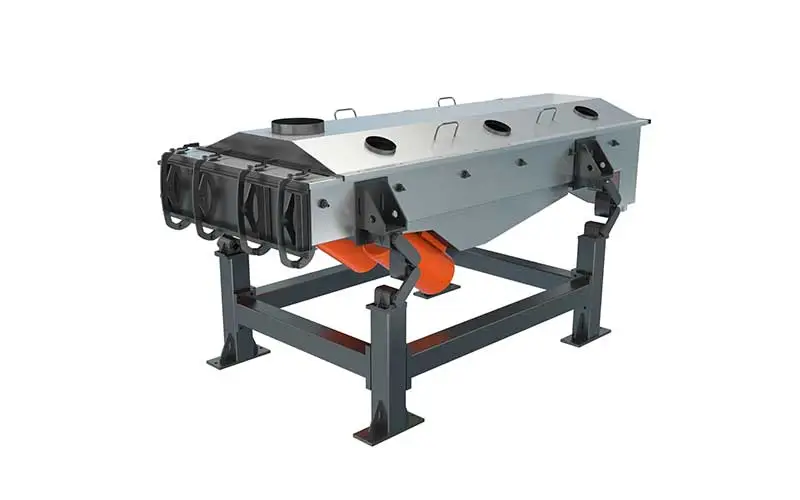
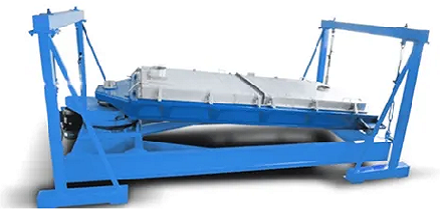
In the vibrating screen machine family, a rectangular separator shines for lithium-ion powders due to its production-ready design:
High-throughput focus: Larger rectangular screening area handles continuous feeds without backups.
Multi-layer grading: Stack 2-4 decks for coarse-to-fine separations in one unit.
Line integration: Compact, with inlet/outlet flexibility for automated milling-blending setups; pairs easily with dust collectors.
Stable performance: Uniform vibration across the frame delivers consistent classification, even for fine, sticky, or electrostatic materials.
Compared to round vibratory sifters, rectangular models offer better aspect ratios for elongated plant spaces and higher capacities—making them a go-to for scaling battery plants.
Selection Checklist for Battery Material Screening
Choosing the right vibrating screen machine? Use this table to spec it out:
| Requirement | What to Ask the Supplier |
|---|
| Target cut size(s) & PSD | "What d50/d90 for 5-50 micron powders?" |
| Material characteristics | "Handling for sticky/abrasive/electrostatic?" |
| Throughput + constraints | "Capacity at .8 g/cm³ bulk density?" |
| Screen mesh/frame | "SS316/wear-resistant options? Tensioning method?" |
| Sealing/dust control | "IP65 enclosure? Aspiration ports?" |
| Cleaning/changeover | "Quick-release decks? <30 min multi-product?" |
| Maintenance | "Spare screen lead time? Access panels?" |
| Validation/traceability | "Sampling ports? Change log compliance?" |
Prioritize battery-proven models with adjustable parameters.
How to Validate Screening Performance in Production
Implementation feels process-driven—start with a trial:
Baseline metrics: Log pre-install PSD, oversize, OEE.
Sampling: Inlet/outlet laser diffraction (e.g., Malvern); capture oversize for analysis.
Screen integrity: Daily visuals, weekly tension checks; replace every 500-100 hours or on anomaly.
Tracking: OEE dashboard for blinding/downtime; compare yield pre/post.
Post-trial: Tighter PSD + 10-20% OEE gains are common (anecdotal from industry).
Common Screening Challenges (and How Plants Address Them)
Battery powders bring unique hurdles—here's how to fix them:
Blinding/clogging: Select anti-blind meshes (ultrasonic/balls); tune amplitude/feed rate.
Agglomerates: Add pre-breaker or two-stage sifting.
Dust leakage: Full sealing + negative pressure hoods; validate with smoke tests.
Inconsistent feed: Vibratory feeders with surge control for steady 80-100% load.
Pro tip: Pilot tests reveal site-specific tweaks.
Example Use Case: Upgrading to Precision Sifting
A mid-sized cathode producer faced post-milling oversize tails causing 5% slurry defects and blending stalls.
Before: Manual sieves + frequent blinding → 15% downtime, variable PSD.
After installing a rectangular separator: Inline sifting stabilized PSD (d90 <25 microns), cut rejects by smoothing downstream flow, and boosted line uptime. No hard numbers, but smoother operations and fewer QC holds.
Final Takeaway
As lithium-ion scales, precision sifting via a rectangular separator—a robust vibrating screen machine—locks in PSD control, slashes defects, and safeguards yields. It's your supply chain's quality lever from milling to packaging.
FAQ
What is a rectangular separator used for in battery powder processing?
A rectangular separator, as a vibrating screen machine, classifies fine cathode/anode powders at key points like post-milling for PSD control.
How does a vibrating screen machine prevent screen blinding?
Through optimized vibration, anti-blind meshes, and ball cleaners—tailored to sticky powders.
What PSD metrics matter most in precision sifting?
d50/d90 consistency, oversize <1%, and yield >98%.
How often to inspect a rectangular separator's screens?
Daily visuals, weekly tension; replace per usage (500+ hours).
Can rectangular separators handle high-throughput battery lines?
Yes, designed for tons/hour with multi-deck grading.
By Carson Zhao
The Founder of Tvtion Machinery Tech.
With more than 15 years of deep-rooted expertise in powder applications, I am Carson Zhao, the founder of Tvtion Machinery Tech, a company dedicated to delivering innovative and high-efficiency solutions for powder handling, mixing, screening, and processing across industries. My passion lies in solving complex powder-related challenges—whether in pharmaceuticals, food, chemicals, plastic, metal powder, etc. —by leveraging cutting-edge technology and hands-on industry experience.
Let's collaborate to transform your powder processes into a competitive advantage.
 EN
EN