If your batches are "mostly fine" but still trigger occasional lumps, hot spots, or cleaning headaches, you're not dealing with a mixing problem—you're dealing with a spec mismatch. In 2026, the real cost of a mixer isn't the purchase price; it's the hidden OPEX from rework, extended cycle time, dust loss, and changeover downtime. A customized plough shear mixer (horizontal plough blender) is often the fastest route to predictable throughput and repeatable quality.
A plough shear mixer—also commonly called a horizontal plough blender—is a high-efficiency mixer designed for fast, uniform blending and dispersion of powders, granules, and some wet mixes. This guide explains how OEM customization improves performance, reduces total cost of ownership, and what to specify when sourcing the right configuration.
What Is a Plough Shear Mixer?
A plough shear mixer is a horizontal mixing vessel fitted with plough-shaped mixing elements mounted on a central shaft. As the shaft rotates, the plough tools continuously lift and throw material across the vessel cross-section, creating a mechanical fluidization zone that achieves rapid, uniform homogenization.
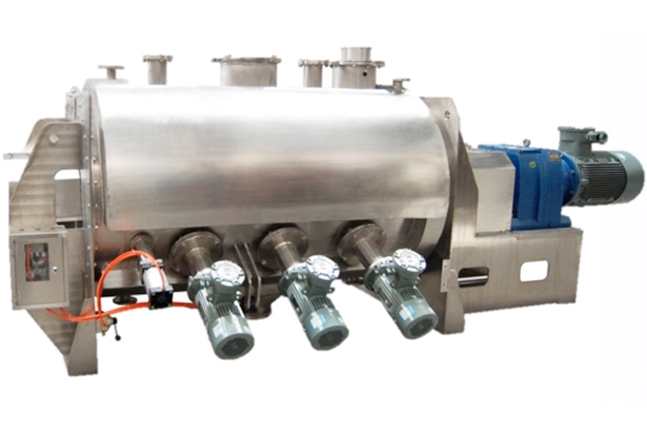
Core mixing goals:
Fast dispersion of powders and granules with minimal dead zones
Consistent uniformity even for cohesive or density-mismatched materials
Compatibility with minor liquid addition (binders, coatings, moisture)
High-throughput batch production with short cycle times
Typical applications:
Dry powder blending with de-lumping requirements
Powder + liquid addition (spray-in binders, coatings)
High-throughput batch production where cycle time matters
Working Principle: How a Plough Shear Mixer Achieves Fast, Uniform Mixing
The performance advantage of a plough blender comes from controlled mechanical fluidization—not slow tumbling or passive diffusion.
How it works:
The plough tools rotate at a tip speed that throws material upward and radially outward. As particles become temporarily airborne in the mixing zone, they redistribute across the vessel cross-section with each rotation. This three-dimensional movement shortens mixing time significantly compared to tumbling mixers.
What customization controls:
| Variable | Customization Lever | Effect |
|---|
| Shear intensity | Tool geometry + shaft speed | Controls dispersion quality and particle breakage risk |
| Temperature rise | Jacket cooling/heating | Prevents heat buildup in sensitive materials |
| Lump breakage | Chopper/intensifier speed | Improves dispersion of agglomerated inputs |
| Uniformity | Fill ratio + residence time | Determines final blend homogeneity |
The same plough shear mixer platform can be tuned for gentle dispersion or aggressive de-lumping—purely through OEM specification.
Component Breakdown: OEM Customization Options in a Plough Blender
Understanding which components are customizable—and why—is the foundation of a strong OEM specification.
Core components:
Horizontal cylindrical vessel (carbon steel, 304 SS, or 316L SS)
Plough shaft with interchangeable tool geometry
Drive motor and gearbox (fixed or variable speed)
End-plate seals (mechanical or labyrinth, depending on material)
Discharge valve (bottom flush, full-bore, or pneumatic)
Customizable modules that drive ROI:
Choppers / intensifier blades: High-speed secondary blades mounted on the vessel wall—essential for breaking agglomerates and improving liquid dispersion. Specify when input materials have a lump tendency or when adding binders.
Jacket heating / cooling: Welded jacket around the vessel for temperature control. Critical for heat-sensitive materials, exothermic blends, or processes requiring elevated temperature (drying-assisted mixing).
Wear liners: Replaceable hardened steel or ceramic-faced liners for abrasive powders (minerals, ceramics, battery materials). Specifying liners upfront is cheaper than replacing a worn vessel.
Dust-tight / vacuum design: Fully sealed vessel with negative pressure capability—reduces fugitive dust, improves workplace air quality, and enables oxygen-sensitive processing.
Spray bars / liquid injection ports: Internally positioned nozzles for uniform binder or liquid addition while the mixer runs. Position and nozzle design affect distribution quality.
Surface finish and cleanability: Electropolished interiors (Ra ≤ 0.8 µm for GMP), crevice-free weld seams, and quick-release end plates reduce cleaning time and cross-contamination risk.
Safety and controls:
Perimeter guarding with door interlocks
Emergency stop at operator level
PLC-based recipe control for repeatable cycle parameters
Chopper speed monitoring and overload protection
Plough Shear Mixer vs. Other Powder Mixers: How to Choose
No mixer type wins every application. Use this framework to identify where a plough shear mixer delivers the most value.
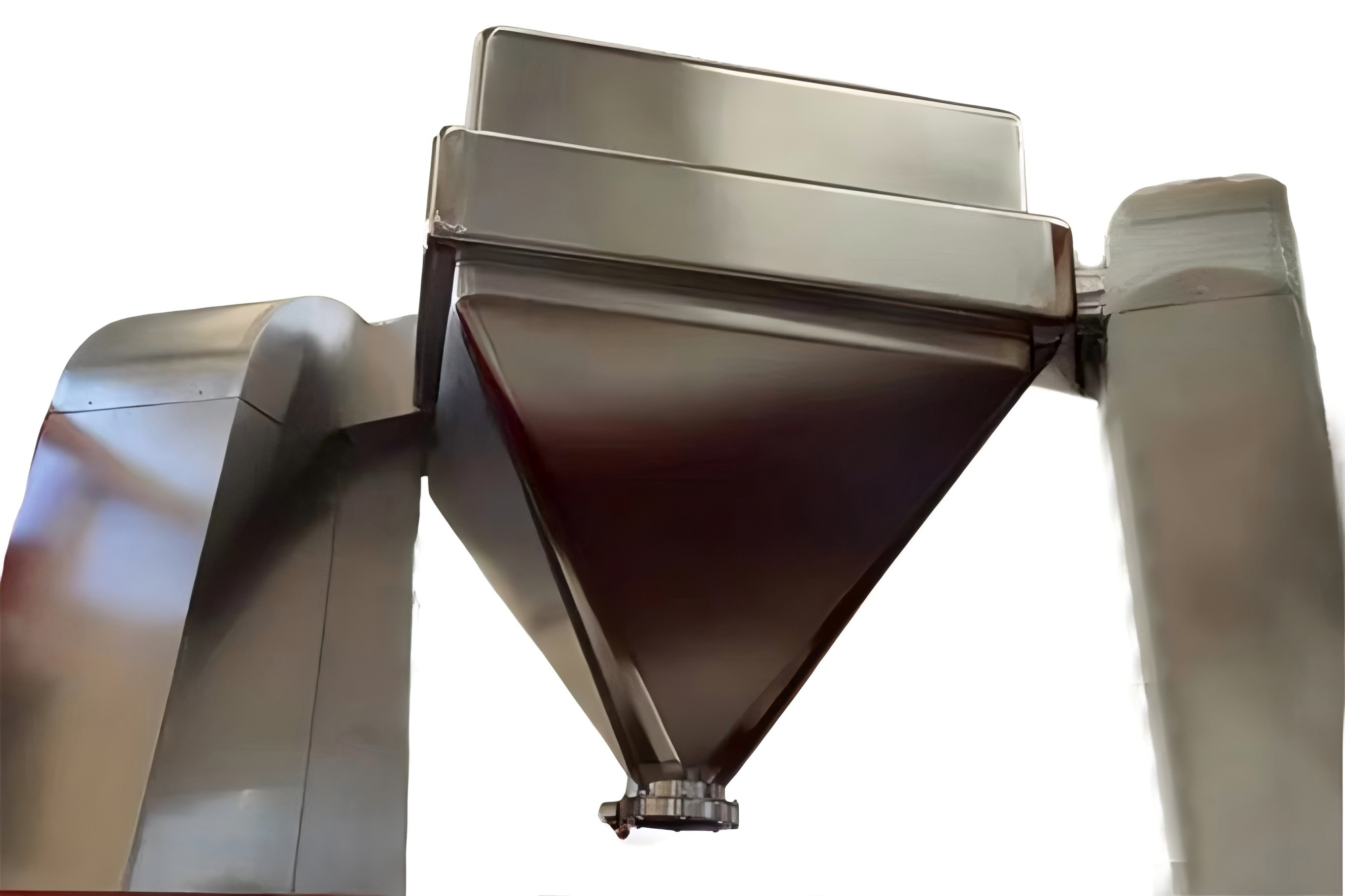
| Criteria | Plough Shear Mixer | Ribbon Blender | Double Cone Blender | High-Shear Granulator |
|---|
| Mixing speed | Fast | Moderate | Moderate | Fast |
| Shear level | Medium–high | Low–medium | Very low | Very high |
| Cohesive powders | Excellent | Moderate | Limited | Excellent |
| Fragile granules | Use carefully | Better | Best | Not suitable |
| Liquid addition | Good (spray bar) | Moderate | Minor only | Yes |
| De-lumping | Yes (with chopper) | No | No | Yes |
| Cleaning complexity | Medium | Medium | Low | Medium–high |
A plough blender is typically the right choice when:
Materials are cohesive, sticky, or prone to agglomeration
Batch time is a constraint and fast cycle completion matters
Minor liquid addition is part of the process
De-lumping is needed without a separate processing step
Consider alternatives when:
Fragile granules cannot tolerate any shear (use double cone or V-blender)
Extremely high-viscosity wet mixing dominates (use sigma or planetary mixer)
Only free-flowing dry powders with no agglomeration risk (ribbon blender may suffice)
Practical selection checklist:
Material cohesion and flowability (Carr Index, angle of repose)
Bulk density and component density differences
Particle fragility and acceptable breakage level
Moisture content and temperature sensitivity
Liquid addition volume and method
Target batch time and required uniformity
Cleaning method and allergen changeover frequency
Industry Applications and Where OEM Plough Blender ROI Shows Up
A correctly specified plough shear mixer delivers measurable ROI across process-intensive industries.
Common industries:
Specialty chemicals: Fast dispersion of additives into carrier powders; jacket cooling for exothermic blends
Food powders: Seasoning blends, protein powders, functional food mixes—where lump-free texture and short cycle times matter
Fertilizers and agrochemicals: High-throughput blending of dense granular materials with minor coating liquids
Battery materials / ceramics: Abrasive slurry or dry powder blending requiring wear liners and precise homogeneity
Nutraceuticals and pharma intermediates: GMP finish, vacuum sealing, and validated cycle control
Quantifiable ROI drivers:
Shorter batch cycles → higher daily throughput without adding equipment
Fewer lumps and out-of-spec batches → lower rework and scrap costs
Proper sealing → reduced dust loss, lower material waste, cleaner workspace
Wear liners and correct metallurgy → extended service life in abrasive service
Quick-release end plates and flush discharge → faster changeover and higher OEE
Honest Challenges: What Reduces ROI Without Correct Customization
A plough blender can underperform when the OEM specification doesn't match real operating conditions.
Risk 1: Over-shearing fragile particles High tip speed combined with choppers can break granules that require integrity. If your downstream process depends on consistent particle size, specify lower shaft speed and confirm with a trial before locking in tool geometry.
Risk 2: Uncontrolled heat rise Intensive mixing generates frictional heat. Without a cooling jacket, heat-sensitive APIs, flavor compounds, or low-melting additives can degrade or clump. Always declare temperature sensitivity in your material profile.
Risk 3: Seal wear with abrasive powders Standard shaft seals wear rapidly when running mineral-laden or ceramic powders. Specifying reinforced mechanical seals or labyrinth designs upfront prevents recurring leakage and contamination.
Risk 4: Residue retention at discharge A poorly designed discharge valve or end-plate geometry leaves material pockets that cause cross-contamination and require manual cleaning between batches. Full-bore flush valves and crevice-free end plates eliminate this problem.
The takeaway: the same plough shear mixer platform can be excellent or painful depending entirely on the OEM specification sheet.
Buyer Checklist: What to Send Your OEM for the Right Plough Shear Mixer
Provide complete material and process data to avoid back-and-forth and receive an accurate, actionable quotation.
Material profile:
Bulk density (loose and tapped), particle size distribution
Flowability / cohesion (free-flowing, cohesive, very cohesive)
Abrasiveness rating, stickiness, moisture content
Temperature sensitivity (max allowable temperature rise)
Process targets:
Batch size (kg / liters, minimum and maximum)
Target mixing time and required uniformity (RSD %)
Acceptable particle breakage level
Liquid addition (if applicable):
Liquid type, viscosity, addition rate
Spray method preference (internal bar, external port)
Post-addition cleaning requirements
Cleaning and compliance:
Dry cleaning (vacuuming/brushing) or wet CIP/WIP
Required interior surface finish (Ra value)
Allergen changeover protocol
Applicable standard: cGMP, FDA, EU GMP, food-grade, ATEX
Site constraints:
Available footprint and ceiling height
Power supply (voltage, phase, Hz)
Dust collection connection point
Automation level required (manual timer, semi-auto, full PLC recipe control)
Maintenance Guide: Keeping a Plough Blender Performing Like Day One
A plough blender has moderate mechanical complexity—maintenance discipline protects both performance and service life.
Routine inspection (weekly/monthly):
Shaft seals: Check for powder leakage, heat, or vibration at the seal housing—early signs of wear before failure
Chopper blades: Inspect blade edges for wear; dull choppers reduce dispersion quality without obvious visual clues
Discharge valve: Confirm full seat closure and check for wear on sealing faces
Bearings and gearbox: Monitor for unusual vibration, temperature rise, or noise changes; follow lubrication intervals strictly
Wear management:
In abrasive service, schedule liner and plough tool replacement on a calendar or tonnage basis—don't wait for visible damage
Keep a documented wear log to predict replacement intervals and avoid emergency downtime
Cleaning discipline:
Follow a written SOP: open end plates, inspect discharge zone and shaft ends, brush or flush, dry, inspect seals, close and log
Pay special attention to the area behind plough tools and at end-plate junctions—common residue retention points
Performance monitoring:
Track motor power draw per batch: rising power at the same fill and speed indicates material buildup or mechanical drag
Monitor temperature rise trend: if heat increases without a recipe change, check seal friction, jacket flow rate, or shaft alignment
Conclusion
Customization is not a premium feature—it's an ROI lever. A correctly specified plough shear mixer reduces batch time, eliminates recurring lump defects, lowers dust loss, and cuts cleaning downtime—often paying back faster than recipe changes or added labor headcount. The key is working with an OEM that matches the plough blender configuration to your real material behavior and operating conditions—not a catalog default.
Ready to specify the right configuration?
Visit the plough shear mixer product page and submit your material profile, batch size, mixing time target, cleaning method, and current mixing issues to receive an OEM configuration recommendation and quotation from TVTION Machinery.
FAQ
Q1: What is a plough shear mixer used for?
A plough shear mixer is used for fast, uniform mixing of powders and granules, dispersing additives, and breaking lumps—often with optional choppers for difficult or cohesive materials.
Q2: Is a plough blender better than a ribbon blender?
Often yes for cohesive powders and fast dispersion needs. A plough blender delivers higher shear and shorter cycle times; ribbon blenders are typically lower shear and better suited to gentle blending of fragile materials.
Q3: What is the ROI of customizing a plough shear mixer?
ROI on a properly specified plough shear mixer typically comes from shorter batch cycles, fewer rejects, reduced cleaning and changeover time, and less downtime from seal or wear issues.
Q4: Do I need to change my process to use a plough blender?
Sometimes. You may need to adjust fill ratio, mixing time, and liquid addition method. OEM options like jackets or choppers on a plough blender can reduce the extent of required process changes.
Q5: What information is needed to quote the right plough shear mixer?
Provide material characteristics, batch size, target mixing time and uniformity, temperature limits, abrasiveness, cleaning requirements, and site constraints to size your plough shear mixer accurately.
By Carson Zhao
The Founder of Tvtion Machinery Tech.
With more than 15 years of deep-rooted expertise in powder applications, I am Carson Zhao, the founder of Tvtion Machinery Tech, a company dedicated to delivering innovative and high-efficiency solutions for powder handling, mixing, screening, and processing across industries. My passion lies in solving complex powder-related challenges—whether in pharmaceuticals, food, chemicals, plastic, metal powder, etc. —by leveraging cutting-edge technology and hands-on industry experience.
Let's collaborate to transform your powder processes into a competitive advantage.
 EN
EN