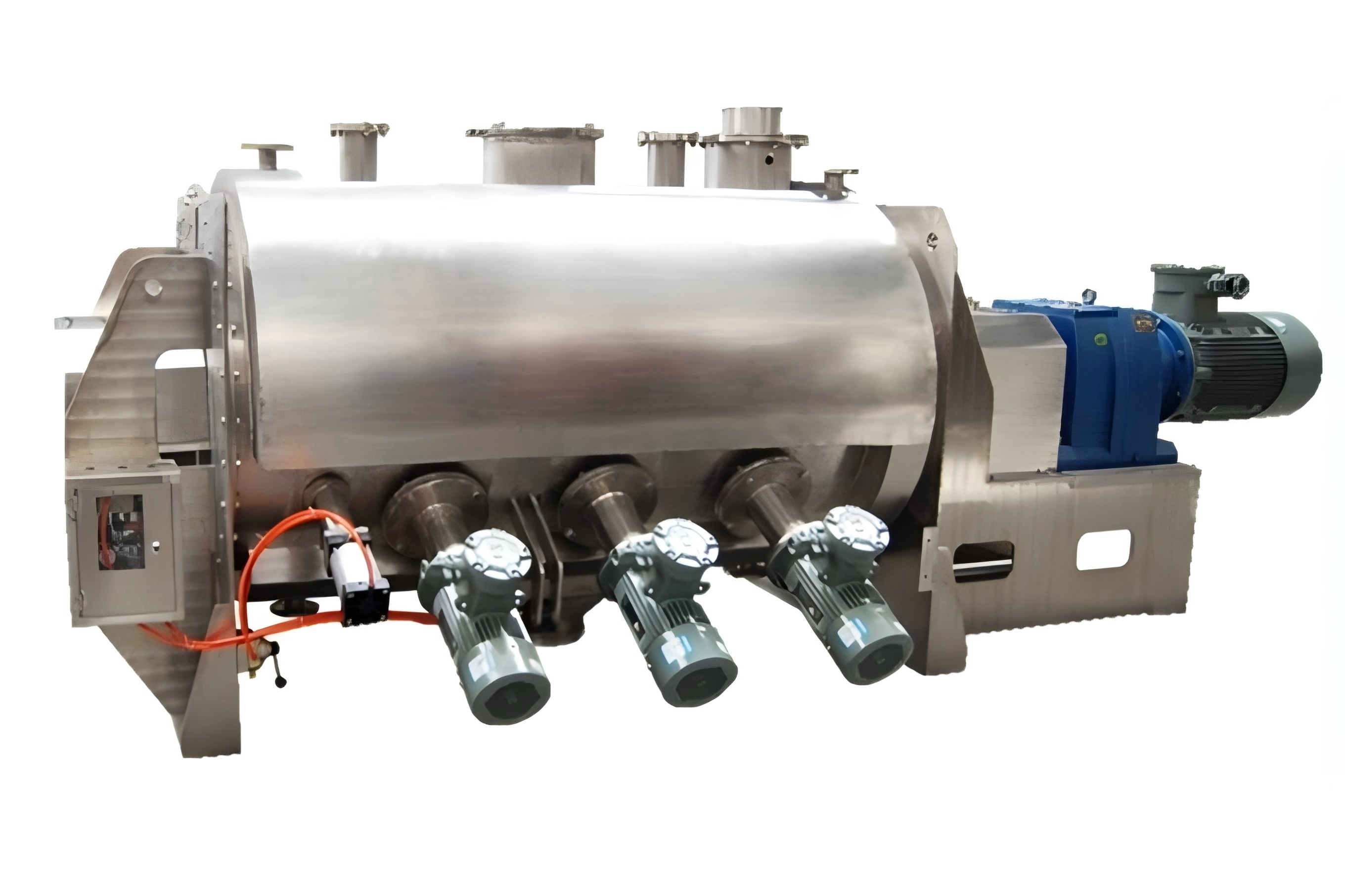
The most expensive mixing failure is the one that passes visual inspection—until a batch fails assay, a customer reports inconsistency, or your line stops for rework. In 2026, tighter quality targets and faster changeovers make "close enough" blending a real margin killer. A double cone blender is often the simplest path to stable powder uniformity without over-shearing sensitive ingredients.
A double cone blender (commonly configured as a double cone mixer machine) uses gentle tumbling to blend powders and granules with repeatable uniformity and minimal heat generation. This guide covers how it works, which specs matter, where it fits best, and how to select and maintain the right model for long-term ROI.
What Is a Double Cone Blender?
A double cone blender is a sealed, rotating vessel shaped like two cones joined at their widest diameter. As the vessel rotates on its horizontal axis, powders and granules are continuously lifted, split, and recombined—achieving blend uniformity through pure tumbling motion.
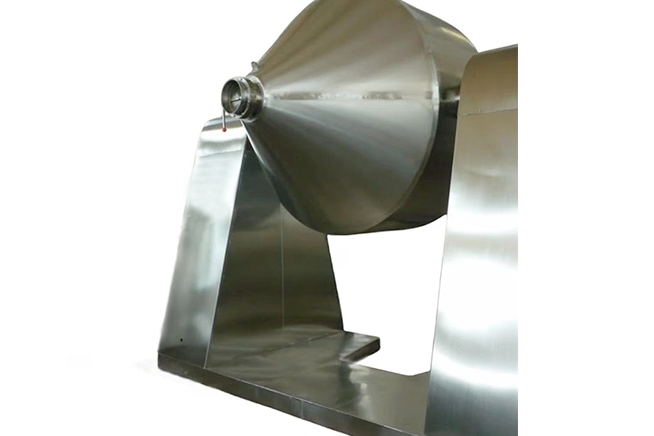
Core design goals:
Consistent powder uniformity across each batch
Low shear to protect fragile particles and active ingredients
Minimal temperature rise during extended mixing cycles
Dust-controlled, sealed operation
Common configurations:
Fixed-volume vessels (from lab scale to full production)
Optional intensifier bar for minor de-lumping or liquid spray addition
Vacuum-rated or dust-tight variants for sensitive materials
GMP-finish stainless steel for pharmaceutical and food applications
Working Principle: Why Tumbling Delivers Superior Uniformity
The double cone blender achieves uniformity through a mechanism fundamentally different from impeller-based mixers.
How it works:
As the double cone mixer machine vessel rotates (typically 6–20 RPM), powder at the bottom cone lifts and flows toward the upper cone. At the intersection, the material splits laterally, then recombines as rotation continues. This repeated splitting and redistribution creates a multi-directional flow pattern that progressively homogenizes the blend.
Key uniformity levers:
| Parameter | Typical Range | Effect on Uniformity |
|---|
| Fill ratio | 40–60% of vessel volume | Critical—underfill or overfill reduces tumbling efficiency |
| Rotation speed | 6–20 RPM | Higher speed increases frequency of material redistribution |
| Blending time | 10–30 minutes | Longer cycles improve uniformity to a plateau; beyond that, segregation can increase |
| Material flowability | Free-flowing preferred | Cohesive materials may require an intensifier bar |
Why it's gentle:
No high-speed impellers or internal agitators
Particle-to-particle contact is soft, tumbling-based
Heat generation is negligible—suitable for heat-sensitive APIs, nutraceuticals, and flavor powders
Component Breakdown: What Makes a Double Cone Mixer Machine Production-Ready
Understanding the key components helps you specify the right double cone mixer machine configuration and avoid costly retrofits later.
Core components:
Vessel (double cone shell): Mirror-polished stainless steel (304 or 316L); weld seams ground smooth for cleanability
Drive motor and gearbox: Sized for the fully loaded vessel weight; variable-frequency drive (VFD) enables speed adjustment
Support frame: Trunnion-mounted to allow full rotation; clearance height must suit your facility
Loading port: Top or side entry; flanged and sealed to prevent dust escape
Discharge valve: Butterfly or ball valve at the cone tip; valve design directly affects segregation risk at discharge
Sealing system: Food/pharma-grade gaskets at all ports to contain fine powders
Critical options (match to your material):
Intensifier bar: A slow-speed, centrally mounted bar inside the vessel—breaks soft agglomerates and improves blend uniformity for slightly cohesive powders
Sampling port: Allows in-process samples without stopping the cycle or breaking containment
Dust extraction port: Connects to facility dust collection during loading/discharge
Vacuum capability: Required when blending moisture-sensitive or oxygen-sensitive materials
Safety and controls:
Full-perimeter guarding with interlocked access panels
Emergency stop at operator level
Recipe/timer controls (PLC-based for GMP applications)
Rotation position sensor for repeatable discharge orientation
Double Cone Blender vs. Other Powder Mixers: How to Choose
No single mixer type is right for every application. Use this comparison to identify where the double cone blender fits—and where it doesn't.
| Criteria | Double Cone Blender | Ribbon Blender | V-Cone Blender | High-Shear Mixer |
|---|
| Mixing mechanism | Tumbling | Internal ribbon agitator | Tumbling | High-speed impeller |
| Shear level | Very low | Low–medium | Very low | High |
| Heat generation | Minimal | Low | Minimal | Significant |
| Cohesive powders | Limited (needs intensifier) | Better | Limited | Best |
| Liquid addition | Minor only | Moderate | Minor only | Yes |
| Cleaning ease | Good | Moderate | Good | Moderate |
| GMP suitability | Excellent | Good | Good | Good |
Choose a double cone blender when:
Your blend is dry, free-flowing to mildly cohesive
Particle fragility or active ingredient sensitivity requires gentle handling
Temperature rise must stay minimal
Repeatability and validation simplicity are priorities
Consider alternatives when:
Your material is highly cohesive or sticky
You need significant liquid addition or wet granulation
High shear is required to break dense agglomerates
Practical selection checklist:
Flowability / cohesion (Carr Index, angle of repose)
Bulk density and density differences between components
Particle size range and fragility
Batch size and required fill range
Cleaning method and changeover frequency
GMP or food-grade finish requirements
Dust containment and facility ventilation
Industry Applications and ROI
A double cone mixer machine delivers measurable return across multiple industries—but only when matched to the right application.
Common industries:
Pharmaceutical / nutraceutical: API blending, dry granule homogenization, capsule fill blends—where uniformity directly affects dosage accuracy
Food powders: Spice blends, protein powders, instant beverage mixes, seasoning formulations
Industrial chemicals: Pigments, specialty additives, ceramic powders, catalyst powders
Cosmetics: Pressed powder foundations, talc-based formulations
Quantifiable ROI drivers:
Lower batch failure rate: Consistent uniformity reduces out-of-spec results and failed assay costs
Reduced rework and scrap: Fewer off-spec batches means less material loss and labor time
Faster validation: Repeatable cycle parameters (speed, time, fill ratio) simplify process validation documentation
Gentle handling: Lower particle breakage preserves active ingredient integrity and improves bulk density consistency
Changeover efficiency: Simple vessel geometry with no internal agitator reduces cleaning time between products
Honest Challenges: What Can Reduce Uniformity
A double cone blender performs well within its design range—but certain conditions will reduce its effectiveness if not planned for.
Risk 1: Density and particle size segregation When blending components with large differences in bulk density or particle size, segregation can occur—especially during discharge. Lighter, finer particles may stratify.
Mitigation: Adjust fill ratio, reduce rotation speed, shorten blending time (over-blending increases segregation), and review discharge valve design.
Risk 2: Incorrect fill ratio Underfilling leaves too much free space; the powder slides rather than tumbles. Overfilling compresses the bed and restricts flow redistribution.
Mitigation: Target 40–60% fill. Pilot test with your actual material before locking in the production cycle.
Risk 3: Discharge-induced separation Even a well-blended batch can partially segregate during discharge if the valve opens too quickly or the discharge chute promotes particle classification.
Mitigation: Use a full-bore discharge valve; control discharge rate; minimize transfer height to downstream equipment.
Risk 4: Cohesive materials without an intensifier Fine, sticky, or slightly moist powders may clump and not distribute effectively through tumbling alone.
Mitigation: Specify an intensifier bar option upfront when ordering your double cone mixer machine; re-evaluate if material moisture content varies.
Buyer Checklist: What to Provide for an Accurate Quote
Provide the following information to get a properly sized and configured double cone blender recommendation:
Material profile:
Bulk density (loose and tapped)
Particle size distribution (D10, D50, D90)
Flowability (free-flowing, cohesive, very cohesive)
Abrasiveness, moisture sensitivity, static charge tendency
Process targets:
Batch size (kg or liters, min and max)
Target blend uniformity (RSD %)
Maximum allowable blending time
Allowable temperature rise
Compliance and cleaning:
Dry cleaning (brushing/vacuuming) or wet CIP/WIP cleaning
Required surface finish (Ra value for GMP applications)
Allergen or cross-contamination changeover requirements
Regulatory standard: cGMP, FDA, EU GMP, food-grade
Site constraints:
Available floor space and ceiling height (rotation clearance)
Power supply (voltage, phase, Hz)
Dust collection connection availability
Explosion protection requirements (ATEX / NEC if handling combustible dust)
Maintenance Guide: Keeping Your Double Cone Blender Consistent
A double cone blender has relatively low mechanical complexity—but consistent maintenance prevents drift in blending performance and reduces unplanned downtime.
Routine inspection (weekly/monthly):
Seals and gaskets: Inspect port seals for wear, cracking, or product residue buildup—replace on schedule rather than waiting for failure
Discharge valve: Check valve seat for wear and leakage; confirm full closure before each cycle
Bearings and drive: Monitor for vibration, noise, or temperature changes; check lubrication per manufacturer interval
Fasteners and guards: Confirm all guard panels are secure and interlocks are functional
Cleaning discipline:
Follow a documented SOP: sequence of port opening, brushing or rinsing, drying, inspection
Prevent residue buildup at the cone-to-cylinder weld seams and around the discharge valve seat
After wet cleaning, confirm vessel is fully dry before the next batch (use vacuum or heated air if required)
Log cleaning records for GMP traceability
Spare parts strategy:
Keep in stock: shaft seals, discharge valve seat/O-rings, port gaskets
Maintain a spare drive belt or coupling element (depending on drive type)
Document part numbers at installation—sourcing delays on wear parts cause preventable downtime
Performance drift indicator: If blend uniformity results begin trending out of spec without a formulation change, check fill ratio consistency, rotation speed calibration, and seal condition before adjusting blending time on your double cone mixer machine.
Conclusion
A double cone blender remains a top-tier choice for uniform dry blending precisely because it delivers repeatability with low shear and low heat—conditions that many powders, APIs, and food ingredients require. Its mechanical simplicity makes validation straightforward and maintenance manageable.
The best results consistently come from matching vessel size, fill ratio range, discharge design, and options like an intensifier bar to your actual material behavior—not a generic specification.
Ready to find the right configuration?
Visit the double cone mixer machine product page and submit your material type, batch size, target uniformity, cleaning method, and current mixing challenges to receive a tailored configuration and quotation from TVTION Machinery.
FAQ
Q1: What is a double cone blender used for? Dry blending of powders and granules where gentle mixing, low heat generation, and consistent uniformity are required—common in pharmaceutical, food, chemical, and nutraceutical manufacturing.
Q2: How is a double cone mixer machine different from a ribbon blender? Ribbon blenders use an internal ribbon agitator and typically apply more shear force. A double cone mixer machine relies entirely on tumbling motion, producing gentler mixing with lower heat generation—better suited for fragile or heat-sensitive materials.
Q3: What ROI can I expect from switching to a double cone blender? ROI typically comes from reduced batch failures, lower rework and scrap costs, faster process validation, and more consistent QA results. A double cone blender pays back through repeatability and reduced margin loss.
Q4: Do I need to modify my process to use a double cone blender? Possibly. You may need to optimize fill ratio, blending time, and discharge handling—particularly for blends prone to density-based segregation or for cohesive materials that benefit from an intensifier bar on your double cone blender.
Q5: What information is needed to select the right model? Provide material bulk density, particle size range, flowability, batch size, required uniformity (RSD target), cleaning method, and any GMP, dust-tight, or explosion-protection requirements to size your double cone mixer machine accurately.
By Carson Zhao
The Founder of Tvtion Machinery Tech.
With more than 15 years of deep-rooted expertise in powder applications, I am Carson Zhao, the founder of Tvtion Machinery Tech, a company dedicated to delivering innovative and high-efficiency solutions for powder handling, mixing, screening, and processing across industries. My passion lies in solving complex powder-related challenges—whether in pharmaceuticals, food, chemicals, plastic, metal powder, etc. —by leveraging cutting-edge technology and hands-on industry experience.
Let's collaborate to transform your powder processes into a competitive advantage.
 EN
EN