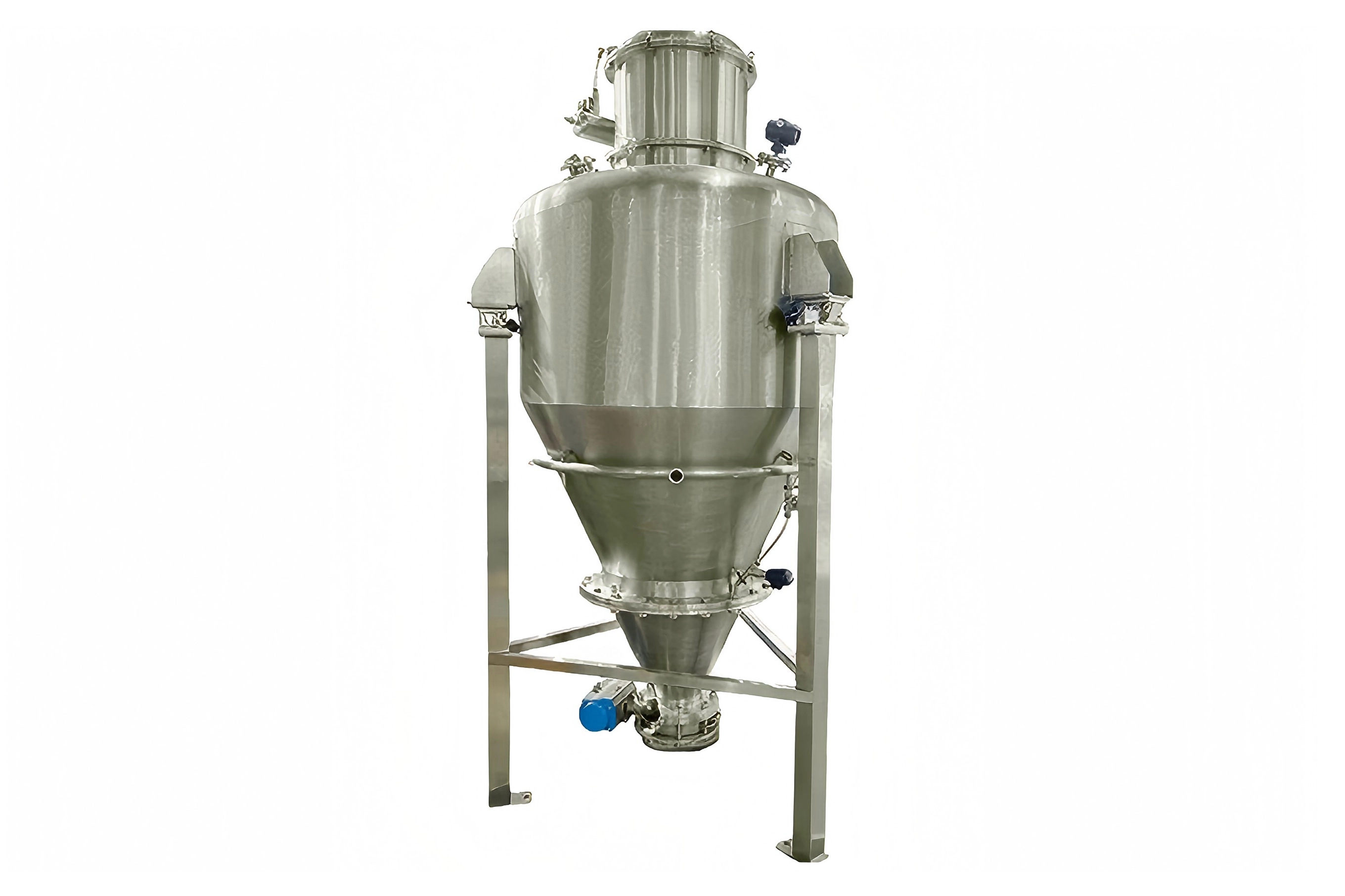
Not every screening problem can be solved by simply choosing a finer mesh or a larger machine. The way material moves across the screen often has just as much influence on the final separation result. For powders and bulk solids, a gyratory screen machine and a vibratory separator represent two different approaches to screening, with differences in material movement, feed distribution, capacity, and product handling. Understanding how these differences relate to your actual process can make it easier to choose a screening system that delivers consistent results without adding unnecessary complexity to the production line.
Why Screening Equipment Should Be Selected Around the Material
Every powder behaves differently during screening. Particle size, bulk density, moisture, flowability, particle shape, and the tendency to form agglomerates can all change how easily material passes through a screen.
For example, a free-flowing powder may move readily across the screen, while a cohesive powder may stay together in lumps and reduce the effective screening area. Moisture can make this problem more noticeable, and fine powders may also be affected by static electricity or screen blinding.
This is why the same gyratory screen machine or vibratory separator can produce different results when processing different materials. The screening machine needs to be matched to the material, target particle-size range, feed condition, and required separation quality.
Before choosing equipment, it is useful to define the actual screening objective. Some applications only need to remove occasional oversize particles, while others require consistent classification into several particle-size fractions. These two applications may call for very different screening configurations.
How a Gyratory Screen Machine Works
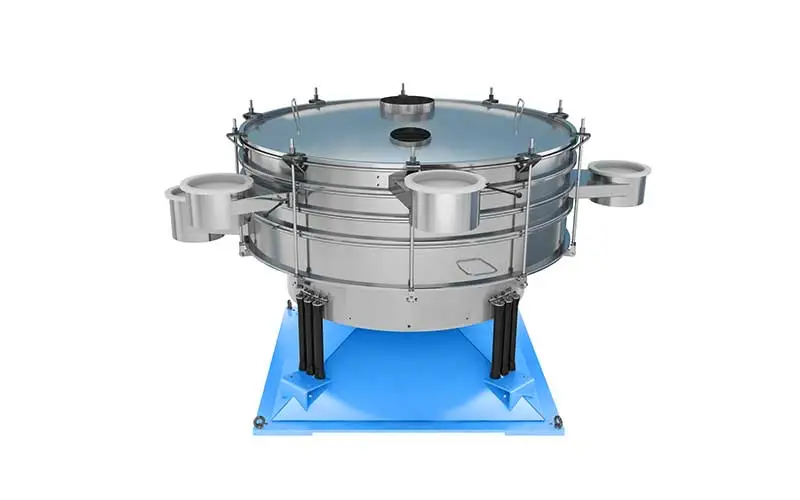
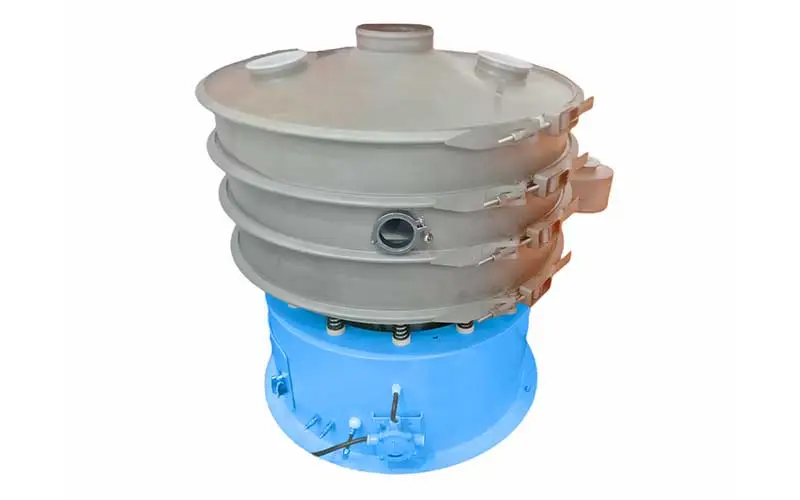
A gyratory screen machine moves material across the screening surface through a controlled gyratory motion. Instead of relying primarily on rapid vibration, the material follows a more deliberate path across the screen, giving particles repeated opportunities to encounter the openings.
This type of movement can be useful when material needs to be distributed across a relatively large screening area. It is particularly worth considering for applications where classification is important and the process needs to handle a substantial amount of material without concentrating the feed in one part of the screen.
A gyratory screen machine can also be configured with multiple screening decks when the process requires more than one particle-size separation. The exact configuration depends on the desired fractions and the characteristics of the material being screened.
That said, a larger screening area does not automatically mean better screening. If the feed is uneven, the material is too wet, or the screen aperture is poorly matched to the product, the expected performance may not be achieved. These factors need to be considered during equipment selection and testing.
How a Vibratory Separator Works
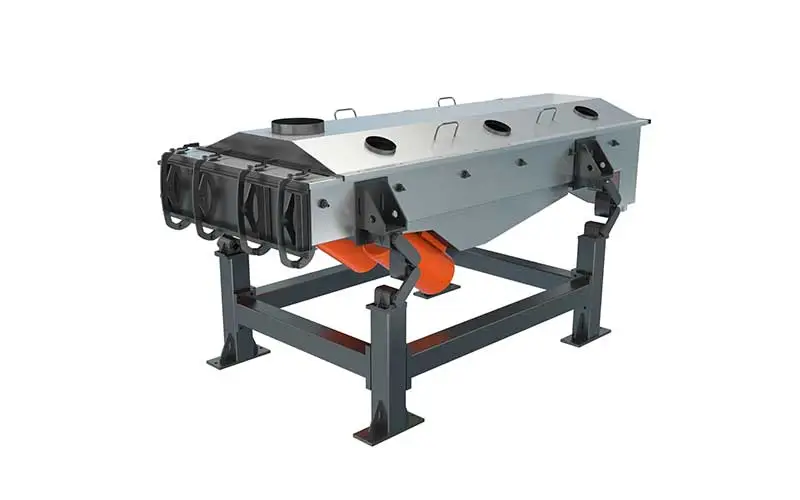
A vibratory separator uses mechanical vibration to move material across the screen. The vibration encourages smaller particles to work their way through the openings while larger particles remain on the screen and move toward the appropriate discharge.
Because the equipment relies on vibration to create particle movement and stratification, the operating conditions can have a noticeable effect on screening performance. Feed rate, material moisture, particle size, screen condition, and vibration characteristics all need to work together.
A vibratory separator can be a practical choice for many powder and bulk-solid screening applications, particularly when a relatively compact screening arrangement is preferred. It can also be integrated into production lines where material needs to be separated before filling, packaging, further processing, or storage.
However, vibration alone cannot compensate for unsuitable feed conditions. If the material is heavily agglomerated or the screen is overloaded, simply increasing the vibration may not solve the underlying problem. The entire screening process needs to be considered.
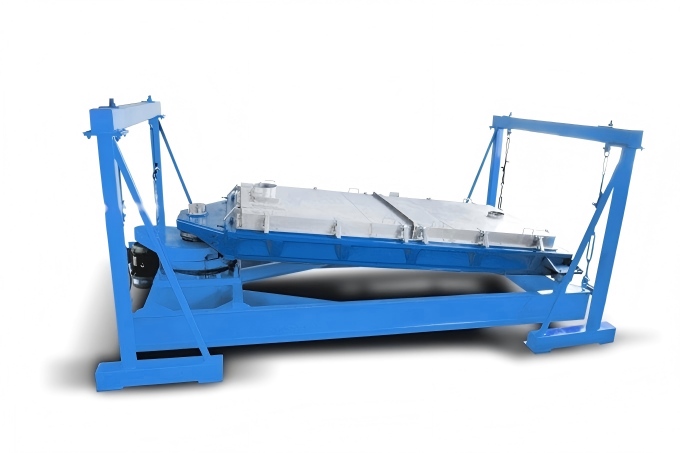
Gyratory Screen Machine vs. Vibratory Separator: What Is the Difference?
| Factor | Gyratory Screen Machine | Vibratory Separator |
|---|
| Screening motion | Controlled gyratory movement across the screen surface | Mechanical vibration creates particle movement across the screen |
| Material movement | Material follows a relatively controlled path across the screening area | Vibration promotes particle movement and stratification |
| Classification | Well suited to applications requiring controlled particle-size classification | Suitable for general screening and separation applications |
| Screening area | Can be configured with a relatively large screening area | Depends on equipment size and screen configuration |
| Multiple fractions | Can be designed with multiple screening decks | Can support multiple separation stages depending on configuration |
| Fine powder | Requires attention to moisture, static, agglomeration, and screen blinding | Requires attention to moisture, static, agglomeration, and screen blinding |
| Best selection approach | Match the machine to the material, feed rate, separation target, screen configuration, and complete process |
There is no universal winner between the two. A gyratory screen machine may be attractive for controlled classification and higher-capacity screening applications, while a vibratory separator may be a practical solution for applications where vibration-based screening meets the required separation target.
When Should You Consider a Gyratory Screen Machine?
A gyratory screen machine is worth considering when the screening stage needs to handle a relatively large material flow while maintaining controlled distribution across the screen. Its movement can help material travel across the available screening area instead of remaining concentrated near the feed point.
This can be useful when the objective goes beyond simple oversize removal. If the production process needs to divide a powder into specific particle-size fractions, a gyratory screening system can be configured around the required classification stages.
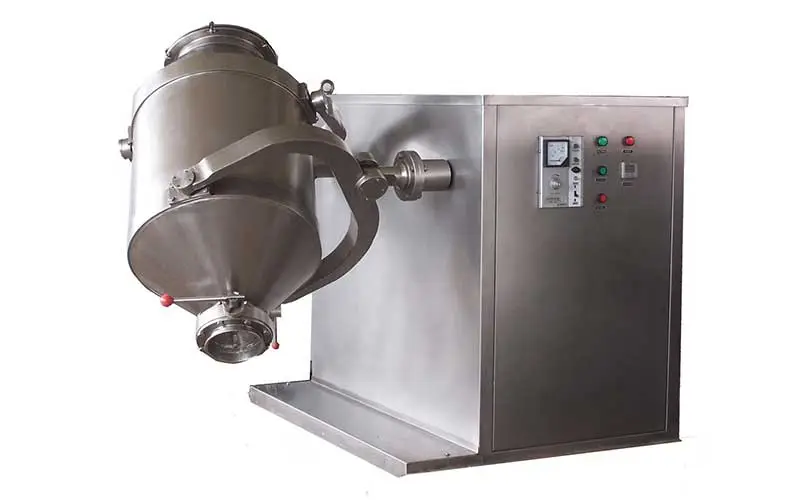
Another factor is how the screen fits into the rest of the line. A gyratory screen machine may be installed after a powder mixer or conveying system and before storage, packaging, or another processing step. Its suitability should therefore be evaluated together with the equipment feeding and receiving the material.
TVTION's gyratory screen machine can be considered for applications where controlled powder classification and screening are important parts of the production process.
When Is a Vibratory Separator the Better Fit?
A vibratory separator may make more sense when the application calls for vibration-based screening and the required separation can be achieved within the available screen area and operating conditions.
It can be considered for powder screening, oversize removal, and particle-size separation where a straightforward screening arrangement fits the production line. The final equipment configuration will depend on the material, feed rate, screen mesh, number of decks, and discharge requirements.
For lower-throughput applications, a vibratory separator may also offer a practical balance between screening requirements and equipment footprint. However, throughput should always be confirmed using the actual material rather than assumed from the machine category.
For difficult materials, a screening trial is often useful. It can reveal whether the powder moves freely across the screen, whether the mesh tends to blind, and whether the desired separation can be maintained at the required feed rate.
What Affects Screening Accuracy?
Screening accuracy depends on several factors working together. Mesh aperture is obviously important, but it is only one part of the picture.
The feed particle-size distribution determines how readily particles can be separated. If many particles are close to the target cut point, achieving a clean separation can be more demanding than screening a material with a wide size difference between the desired fractions.
Feed rate also matters. When too much material reaches the screen at once, particles may form a deeper layer and have fewer opportunities to contact the mesh. This can reduce separation performance even when the screen itself is correctly selected.
Moisture and cohesion create another challenge. Fine powders can stick together or adhere to the screen, reducing the open screening area. Static electricity can create similar problems with some dry, fine materials.
These issues apply to both a gyratory screen machine and a vibratory separator. The appropriate equipment should therefore be selected together with a realistic understanding of the material and operating environment.
Why Stable Feeding Matters
A screen can only perform consistently if it receives material at a reasonably stable rate. Sudden surges from a hopper, blender, feeder, or conveying system can temporarily overload the screen and affect the separation result.
This is particularly important in continuous powder-processing lines. If the upstream equipment delivers material faster than the screen can process it, the problem may appear to be a screening problem when the real issue is feed control.
The same applies downstream. If the screened material cannot be removed at a consistent rate, the screen may experience interruptions or material accumulation.
For this reason, a gyratory screen machine or vibratory separator should be evaluated as part of the complete process rather than as an isolated piece of equipment.
Screen Mesh, Deck Configuration, and Product Fractions
The screen mesh should be selected according to the actual separation target. A finer mesh is not automatically better. If the aperture is too small for the material or the feed contains significant moisture or agglomerates, screening capacity can be reduced.
When several particle-size fractions are required, multiple screening decks can provide a way to separate the material in stages. The number and arrangement of decks should be based on the desired product fractions and the characteristics of the feed.
Before selecting a gyratory screen machine or vibratory separator, manufacturers should clearly define which fraction is the final product, which fraction is oversize, and whether any intermediate fraction needs to be collected separately.
Protecting Product Integrity During Screening
Separation efficiency is not the only concern. Some products need to retain their particle structure throughout the screening process.
Fragile particles may be affected by excessive mechanical action, while some powders can generate additional fines when subjected to unnecessary impact or movement. Heat generation and dust formation may also need to be considered depending on the material.
A gyratory screen machine and a vibratory separator create different movement patterns, so manufacturers should evaluate how the selected screening method affects the actual product rather than assuming that one type is always gentler.
For sensitive materials, testing can help determine whether the required separation is achieved without creating unacceptable changes in particle size or product quality.
Cleaning and Maintenance Should Be Part of the Decision
Screening equipment often handles large quantities of powder, so cleaning and maintenance should be considered before installation rather than after problems occur.
Screen access, product-contact surfaces, seals, discharge areas, and inspection points should be reviewed according to the application's hygiene requirements. This is particularly important for food, pharmaceutical, and other applications where cross-contamination needs to be controlled.
Screen replacement is another practical consideration. The equipment should allow operators to inspect and replace the screen efficiently when required. Maintenance access to drive components and other critical parts should also be appropriate for the intended operating environment.
Whether the system uses a gyratory screen machine or a vibratory separator, long-term operating costs depend not only on energy use but also on screen life, cleaning time, maintenance requirements, and production interruptions.
Integrating the Screen Into a Powder Processing Line
In a complete powder-processing system, screening is usually one step among several. The material may first be fed into a blender, transferred through a conveying system, screened, and then sent to storage or packaging.
This makes equipment compatibility important. An upstream blender should discharge at a rate that the screening stage can handle, while the conveying system should provide stable material transfer. The screened product should then be discharged in a way that matches the requirements of the next process.
Manufacturers planning or upgrading a powder-processing line can explore TVTION powder processing equipment to review available solutions for screening, conveying, mixing, and other powder-handling processes.
What to Include in a Screening Equipment Specification
A good equipment specification should give the supplier enough information to understand the actual screening problem. Start with the material: provide bulk density, particle-size distribution, moisture content, temperature, flowability, cohesiveness, abrasiveness, and particle shape where these characteristics are relevant.
Next, define the production requirements. Feed rate, target cut point, desired product fractions, acceptable oversize or undersize, operating schedule, cleaning method, and required screening performance should all be clearly stated.
It is also useful to provide information about the equipment connected to the screen. Details about the upstream mixer, feeder, hopper, conveying system, storage vessel, or packaging equipment can help the supplier determine whether the proposed screening machine will work effectively within the complete line.
If there is uncertainty about the best screening principle, testing the actual product can be especially valuable. A material trial can help determine whether a gyratory screen machine or vibratory separator provides the required separation without compromising product quality.
How TVTION Can Help With Screening Equipment Selection
Screening equipment works best when it is designed around the material and the rest of the production line. TVTION can evaluate screening requirements together with feed conditions, target particle-size separation, equipment configuration, and powder-processing requirements.
Depending on the application, manufacturers may consider a gyratory screen machine when controlled classification and screening capacity are priorities, or a vibratory separator when vibration-based separation fits the material and production conditions.
For projects involving difficult powders, multiple particle-size fractions, customized layouts, or integration with existing machinery, customers can contact TVTION for a customized screening solution. Providing material specifications and details about the production process can help make the equipment evaluation more targeted and practical.
How to Choose Between a Gyratory Screen Machine and Vibratory Separator
The choice ultimately comes down to how the material needs to be separated and how the screening stage fits into the production process.
A gyratory screen machine may be a strong candidate when controlled material movement, classification, and effective use of screening area are important. A vibratory separator may be a better fit when vibration-based screening can meet the required separation target within the available equipment configuration.
Instead of asking which machine is generally better, manufacturers should ask which machine is better suited to their material, feed conditions, required particle fractions, production rate, product sensitivity, and maintenance requirements. This approach leads to a more practical equipment decision and reduces the risk of selecting a machine based only on nominal specifications.
Conclusion
A gyratory screen machine and a vibratory separator offer different approaches to powder and bulk-solid screening. The gyratory screening principle can be useful for controlled classification and applications requiring effective distribution across the screening area, while vibratory screening can provide a practical solution for many general separation applications.
Neither technology is the right choice for every material. Feed stability, particle characteristics, moisture, mesh selection, screening area, product sensitivity, cleaning, maintenance, and downstream integration all influence the final result.
The most reliable way to select screening equipment is to start with the material and separation target, then evaluate the equipment against real operating requirements. When necessary, product testing can provide additional confidence before the final equipment configuration is selected.
Frequently Asked Questions
1. What is a gyratory screen machine used for?
A gyratory screen machine is used to separate and classify powders or bulk solids according to particle size. Its controlled movement helps distribute material across the screening surface.
2. What is a vibratory separator used for?
A vibratory separator uses mechanical vibration to move material across a screen and separate particles according to their ability to pass through the selected mesh.
3. Is a gyratory screen machine better than a vibratory separator?
Not necessarily. The better choice depends on the material, feed rate, required separation, screen configuration, product sensitivity, available space, and overall process requirements.
4. Can a vibratory separator be used for fine powders?
Yes. A vibratory separator can be used for fine powders, but moisture, static electricity, agglomeration, screen blinding, and feed stability should be considered during equipment selection.
5. What information should I provide when choosing screening equipment?
Useful information includes particle-size distribution, bulk density, moisture, temperature, flowability, feed rate, target cut point, desired product fractions, cleaning requirements, and details of upstream and downstream equipment.
6. Can TVTION help select the right screening machine?
Yes. TVTION can evaluate the material characteristics, screening objectives, feed conditions, and production-line requirements to help determine a suitable screening configuration. Customers can provide their process information for a more targeted equipment recommendation.
By Carson Zhao
The Founder of Tvtion Machinery Tech.
With more than 15 years of deep-rooted expertise in powder applications, I am Carson Zhao, the founder of Tvtion Machinery Tech, a company dedicated to delivering innovative and high-efficiency solutions for powder handling, mixing, screening, and processing across industries. My passion lies in solving complex powder-related challenges—whether in pharmaceuticals, food, chemicals, plastic, metal powder, etc. —by leveraging cutting-edge technology and hands-on industry experience.
Let's collaborate to transform your powder processes into a competitive advantage.
 EN
EN