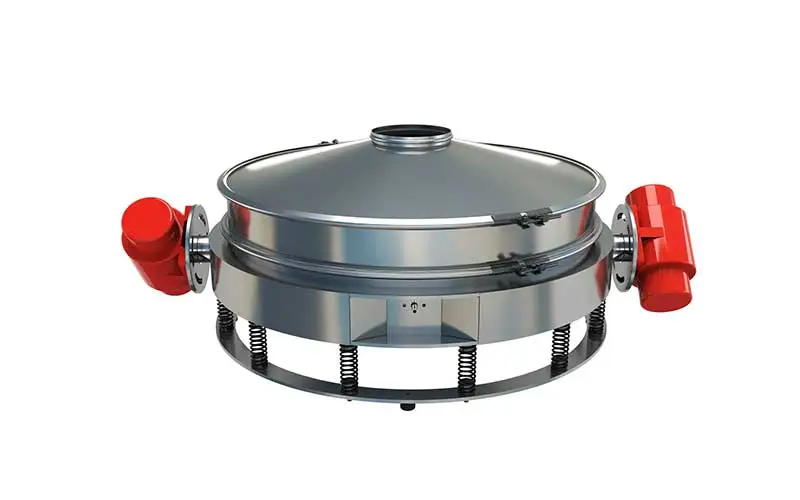
Efficient powder handling requires more than choosing individual machines with the right capacity. The way powder is transferred between processing stages can directly affect production continuity, material loss, dust control, mixing efficiency, and product quality. When a production line uses a double cone blender, selecting an appropriate conveying method is particularly important because the transfer system must deliver powder reliably without compromising the requirements of the mixing process.
A vacuum conveying system can provide an enclosed method for transferring powders from one processing point to another. When properly integrated with a double cone blender, it can help reduce manual handling, improve material transfer, and create a more continuous powder-processing workflow. However, the conveying method should still be selected according to powder characteristics, conveying distance, required capacity, equipment layout, and cleaning requirements.
This guide explains how vacuum conveying works with a double cone blender, how dense-phase and dilute-phase conveying differ, what factors should be considered during system selection, and how to evaluate a complete powder-handling solution from a supplier such as TVTION.
Why Powder Transfer Matters Before and After a Double Cone Blender
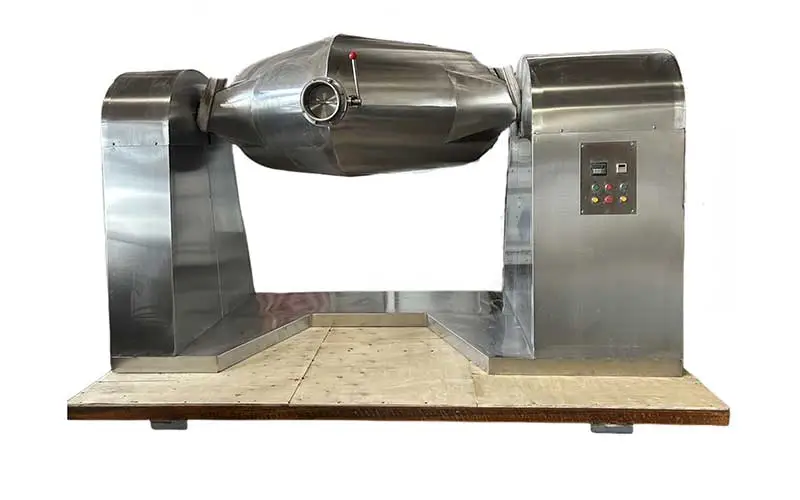
A double cone blender is commonly used for gentle and uniform mixing of dry powders and other free-flowing materials. However, mixing is only one stage of the production process. Before blending, raw materials must reach the blender efficiently, and after blending, the finished powder may need to move to a screening machine, storage vessel, filling line, or packaging system.
If powder transfer between these stages is unstable, the performance of the overall production line can be affected. Manual transfer may increase handling requirements, while poorly designed conveying equipment can introduce excessive dust, material loss, segregation, or inconsistent feeding.
This is why the conveying system should be considered together with the blender rather than as an independent machine. The inlet arrangement, discharge method, transfer distance, material characteristics, and downstream equipment all influence the appropriate design.
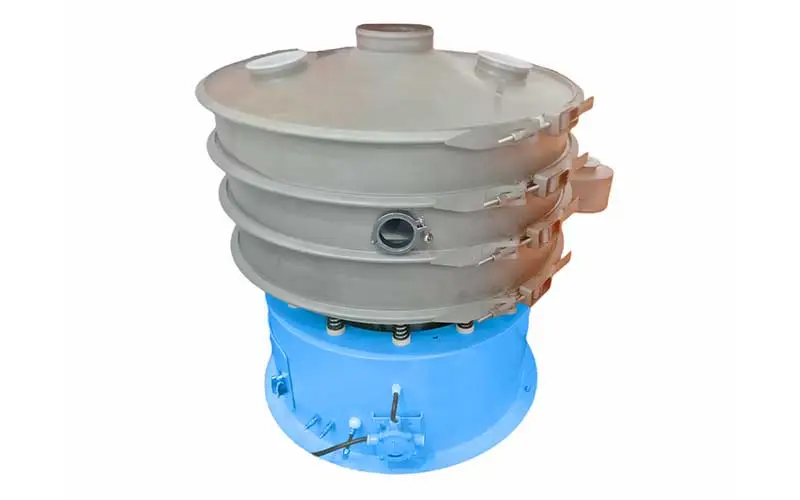
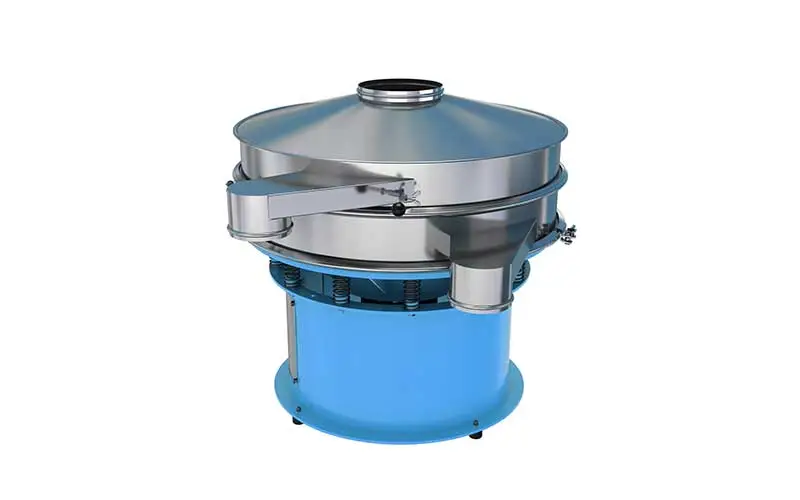
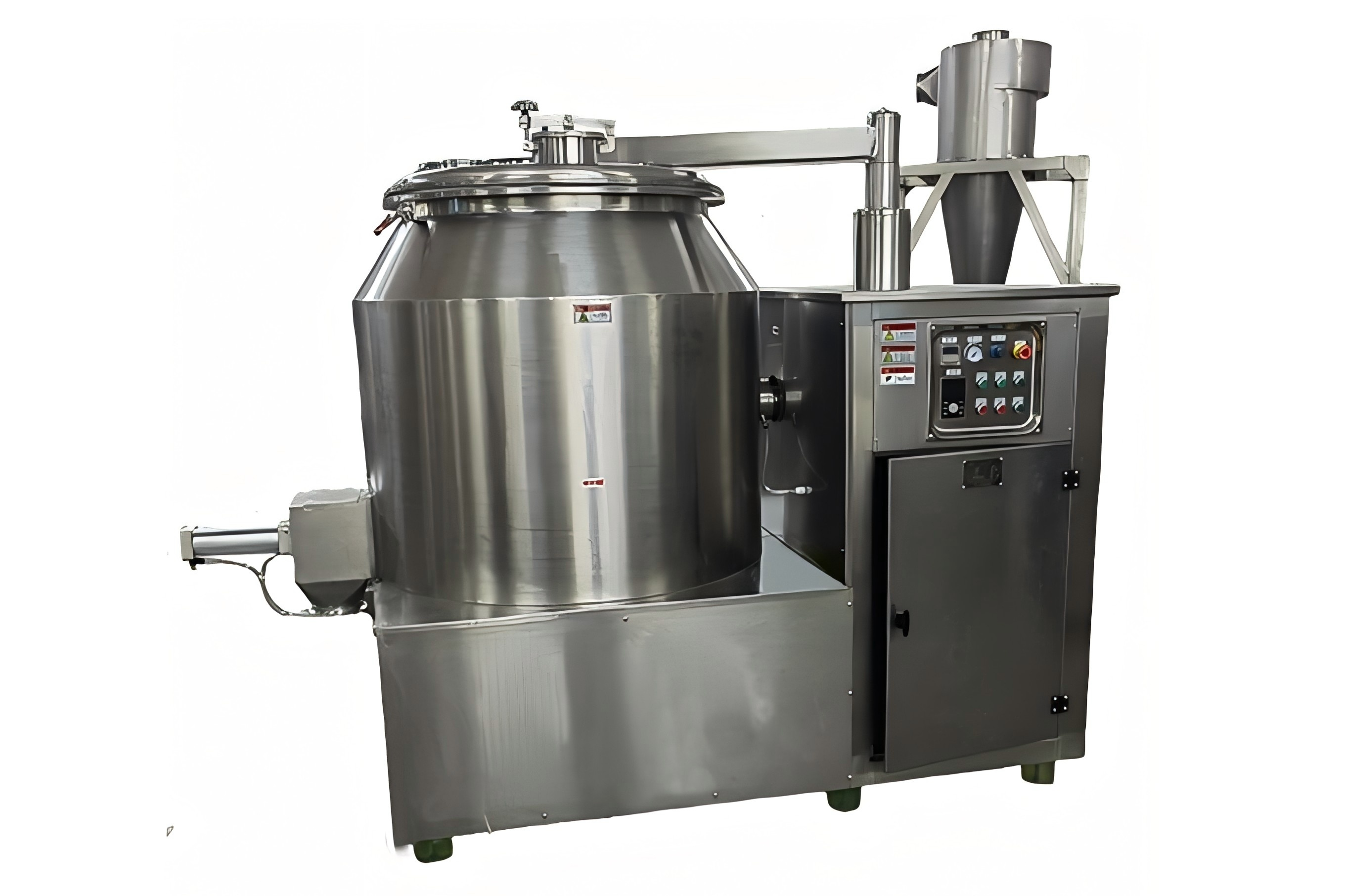
For powder-processing manufacturers, an integrated layout can make it easier to coordinate conveying, mixing, screening, grinding, storage, and packaging operations. TVTION's range of powder-processing equipment can be evaluated according to these complete process requirements.
How a Vacuum Conveying System Supports Powder Handling
A vacuum conveying system uses negative pressure to draw powder through a conveying pipeline from a pickup point toward a receiving destination. The powder can be transferred in an enclosed route, which can help limit exposure to the surrounding environment and reduce manual material movement.
For powder applications, enclosed transfer can be particularly useful when dust containment and product protection are important. Instead of repeatedly moving powder manually between containers, a properly designed vacuum conveying arrangement can connect different processing points through a controlled transfer route.
When the receiving point is a double cone blender, the conveying system needs to be matched to the blender's loading requirements. The feeding sequence, material volume, inlet configuration, filtration, discharge arrangement, and cleaning procedure should all be considered during system design.
The objective is not simply to move powder from point A to point B. A successful powder conveying solution should provide stable transfer while fitting naturally into the complete production process.
Why Combine a Vacuum Conveying System With a Double Cone Blender?
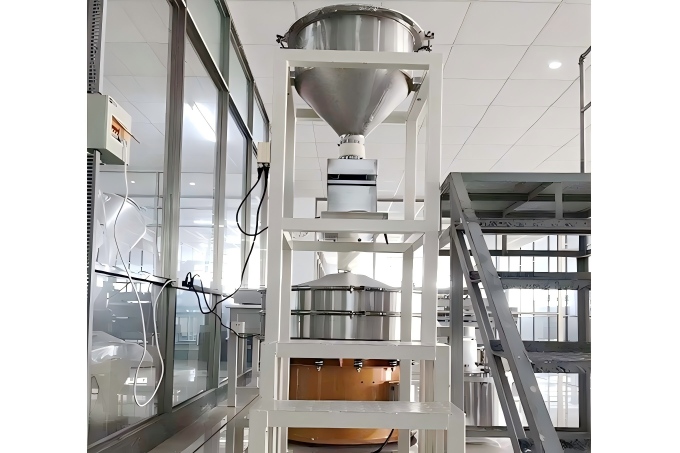
Combining a vacuum conveying system with a double cone blender can create a more integrated powder-handling workflow. Raw materials can be transferred to the blending stage without relying entirely on manual transportation, while the finished material can subsequently be transferred to downstream equipment according to the process requirements.
One important benefit is process continuity. When conveying equipment is correctly sized and controlled, operators can spend less time manually moving powder between stages. This can simplify production workflows and make the connection between storage, feeding, blending, screening, and packaging equipment more practical.
Another consideration is dust control. Powder transfer can generate airborne particles when bags, containers, hoppers, and processing machines are repeatedly opened and connected manually. An enclosed conveying route can help reduce opportunities for uncontrolled powder release, although appropriate filtration, sealing, and dust-control measures are still required.
Material protection is also important. The conveying conditions should be selected according to the powder's sensitivity to impact, shear, heat, and segregation. A conveying method that is suitable for one powder may not be appropriate for another, even when both materials are processed using the same blender.
Dense Phase vs. Dilute Phase for Powder Conveying
Dense-phase and dilute-phase conveying are two major approaches used in pneumatic powder transfer. The distinction is primarily related to the concentration of solids in the conveying line and the way the material moves through the pipeline.
Dense-phase conveying transports a relatively high concentration of solids under controlled pressure and gas-flow conditions. Depending on the material and system design, the powder may move in concentrated plugs, slugs, dunes, or other non-uniform flow patterns. Lower particle velocity can be beneficial for some fragile or abrasive materials, although the actual conveying behavior must be established for the specific powder.
Dilute-phase conveying uses a comparatively higher gas velocity to keep particles suspended in the conveying stream. This approach can provide practical and flexible material transfer for many suitable free-flowing powders and granular materials.
Neither method should be selected solely because one is generally described as gentler or more flexible. The correct choice depends on powder flowability, particle size, bulk density, abrasiveness, conveying distance, pressure requirements, feeding conditions, and the performance requirements of the complete process.
Dense Phase vs. Dilute Phase: Comparison for Powder Handling
| Selection Factor | Dense-Phase Conveying | Dilute-Phase Conveying |
|---|
| Solids concentration | Higher concentration of powder in the conveying line | Lower solids concentration with particles carried in the gas stream |
| Particle velocity | Can operate at lower particle velocity when properly designed | Generally uses higher conveying velocity |
| Fragile powders | May be suitable where controlled particle movement is required | Requires evaluation where particle impact or attrition is a concern |
| Abrasive materials | Lower particle velocity may help manage wear in suitable applications | Higher velocity can increase wear at certain pipeline sections |
| Material flowability | Requires appropriate powder-flow characteristics and system design | Can be practical for many free-flowing materials |
| System design | Requires careful coordination of pressure, feeding, pipeline, and controls | Requires correct gas flow, feeding, pipeline, and filtration design |
| Best selection approach | Application-specific engineering and material evaluation | Application-specific engineering and material evaluation |
This comparison is intended as a general engineering guide rather than a universal specification. The appropriate conveying regime should be confirmed according to the actual powder and operating conditions.
What Powder Characteristics Should Be Evaluated?
Before selecting a vacuum conveying system for a powder-processing line, the material itself should be evaluated. Particle size and particle-size distribution can influence conveying behavior, while bulk density affects the amount of material that can be transported under a given operating condition.
Flowability is another important consideration. Free-flowing powders may behave differently from cohesive materials that tend to bridge, agglomerate, or form deposits inside equipment. Moisture content can also affect powder flow and may increase the risk of agglomeration.
Abrasiveness should be considered because repeated particle movement through bends and other pipeline sections can cause wear. Fragile or friable materials may require a conveying regime that limits unnecessary particle impact.
Temperature, hygroscopicity, electrostatic behavior, hygiene requirements, and contamination sensitivity can also influence equipment selection. For food and pharmaceutical applications, the conveying system may require specific contact materials, surface finishes, filtration arrangements, and cleaning procedures.
How to Match Conveying Capacity With the Blender
Conveying capacity should be considered together with the operating cycle of the double cone blender. A batch blender may not require the same continuous transfer pattern as a continuously operating processing machine.
The supplier should understand the required batch size, loading sequence, expected transfer frequency, available loading time, and downstream requirements. If the conveying system cannot supply material at the required rate, the blender may experience unnecessary waiting time. Conversely, an oversized conveying system may introduce unnecessary energy use or operating complexity.
For this reason, capacity should be established from the actual production cycle rather than selected from a generic equipment catalogue value.
Pipeline Layout and Equipment Integration
The physical arrangement of the powder-processing line is another important factor. The supplier should understand the horizontal conveying distance, vertical lift, number and type of bends, pipeline routing, pickup position, receiving position, and available installation space.
Pipeline bends can influence pressure loss and particle-wall interaction. The location of valves, filters, receivers, hoppers, and discharge devices should therefore be considered during the engineering stage.
Integration with the double cone blender is equally important. The conveying receiver or discharge arrangement must work with the blender's inlet configuration and loading procedure. After blending, the finished powder may require another conveying stage before screening, storage, or packaging.
A complete process layout therefore provides a better basis for equipment selection than treating every machine as a separate purchase.
Common Mistakes When Selecting Powder Conveying Equipment
Choosing Equipment Based Only on Throughput
Throughput is an important specification, but it does not describe powder behavior. Two materials with the same required capacity may require different conveying conditions because of differences in density, flowability, particle size, and abrasiveness.
Ignoring Powder Feeding Conditions
Stable conveying depends on stable feeding. A hopper, valve, feeder, or receiving vessel must be capable of supplying the conveying line consistently. Feeding problems can cause fluctuations even when the pipeline itself has been correctly designed.
Overlooking Dust Control
Powder transfer points are common locations for dust release. Seals, filters, receivers, discharge points, and connections should therefore be evaluated as part of the complete system rather than added as an afterthought.
Using Excessive Conveying Velocity
Higher velocity does not automatically mean better conveying performance. Depending on the material, excessive velocity can increase particle impact, wear, noise, and product degradation. The operating conditions should be matched to the material and process requirements.
Failing to Consider Cleaning Requirements
When the same equipment handles different powders, cleaning and changeover requirements become important. The design should provide practical access to areas that require inspection or cleaning while minimizing contamination risks.
How to Evaluate a Supplier for a Powder Conveying System
A capable supplier should begin by understanding the complete powder-processing application rather than recommending equipment from capacity alone. Ask the supplier to explain the design basis, material assumptions, conveying method, pipeline arrangement, filtration strategy, feeding method, and expected operating conditions.
The supplier should also explain how the conveying equipment will interface with the double cone blender and downstream equipment. If the process includes screening, grinding, storage, or packaging, those connections should be incorporated into the overall engineering discussion.
TVTION can be evaluated as a powder-processing equipment supplier when customers require conveying and other powder-handling machines to work together as part of an integrated production line.
To explore the available powder-processing and material-handling equipment, visit the TVTION Products page.
When Is a Vacuum Conveying System a Practical Choice?
A vacuum conveying system can be considered when enclosed powder transfer, controlled material movement, and reduced manual handling are important requirements. It can be especially useful when material needs to be transferred from one or multiple pickup points toward a receiving vessel or processing machine.
The method can also support cleaner production layouts by reducing the need for open manual transfer between processing stages. However, the final system still needs suitable filtration, seals, receiver design, controls, and cleaning arrangements.
For a production line using a double cone blender, vacuum conveying may be used to transfer raw materials into the blender or to move finished powder toward another processing stage, depending on the plant layout and process sequence.
How TVTION Can Fit Into an Integrated Powder-Processing Line
Powder processing often involves several connected operations rather than a single machine. A typical process may include raw-material feeding, conveying, blending, screening, grinding, storage, and final packaging. Each stage can influence the requirements of the next stage.
TVTION's equipment portfolio allows customers to consider conveying alongside other powder-processing requirements. This integrated approach can help simplify discussions about equipment interfaces, material transfer, production flow, and installation requirements.
When the application requires a customized conveying and processing arrangement, customers can provide their material characteristics, required capacity, conveying distance, equipment layout, and production requirements to contact TVTION's technical team for further evaluation.
How to Choose the Right Powder Conveying Solution
The right selection process begins with defining the material and production requirements. Start by identifying the powder characteristics, then establish the required conveying capacity, distance, pipeline arrangement, feeding conditions, and destination equipment.
Next, determine whether dense-phase or dilute-phase conveying is more appropriate for the specific material. If a vacuum-based transfer method is being considered, evaluate how the vacuum conveying equipment will connect with the double cone blender and other machines in the process.
Finally, review filtration, dust control, cleaning, maintenance, equipment integration, and technical support. A supplier that can explain the engineering reasoning behind its recommendation provides a stronger basis for making a long-term equipment decision.
Conclusion
Efficient powder handling depends on how well conveying equipment works with the rest of the production line. When a double cone blender is used for powder mixing, the conveying system should be selected according to the material characteristics, blender operating cycle, transfer distance, feeding conditions, and downstream process requirements.
A vacuum conveying system can provide an enclosed approach to powder transfer and may help improve process continuity, dust control, and material handling when correctly designed. Dense-phase and dilute-phase conveying should then be evaluated according to the actual powder rather than selected through general assumptions.
The most reliable approach is to define the complete process first, evaluate the powder characteristics, establish the conveying requirements, and then select equipment based on the resulting engineering conditions. By integrating conveying with blending, screening, grinding, storage, and packaging requirements, manufacturers can develop a more practical and reliable powder-processing line.
Frequently Asked Questions
1. Can a vacuum conveying system be connected directly to a double cone blender?
Yes. A vacuum conveying system can be integrated with a double cone blender when the conveying capacity, receiver, inlet arrangement, powder characteristics, and blender loading requirements are properly matched.
2. What powders are suitable for vacuum conveying?
Many dry powders and granular materials can be conveyed under vacuum, but suitability depends on flowability, particle size, bulk density, moisture, abrasiveness, and other material characteristics. Application-specific evaluation is recommended.
3. Is dense-phase or dilute-phase conveying better for a double cone blender?
Neither is universally better. The choice depends on the powder, required capacity, conveying distance, product sensitivity, pipeline configuration, and the operating requirements of the complete blending line.
4. Why use a vacuum conveying system for powder handling?
A vacuum conveying system can provide enclosed material transfer, reduce manual handling, and support dust control. It can also help connect different processing stages when the system is properly designed and integrated.
5. What information should I provide when requesting a powder conveying solution?
Provide the powder characteristics, required capacity, conveying distance, vertical lift, pipeline layout, number of bends, feeding conditions, destination equipment, cleaning requirements, and any special hygiene or dust-control requirements.
6. Can TVTION provide equipment for an integrated powder-processing line?
TVTION offers powder-processing and material-handling equipment that can be evaluated together according to the requirements of the complete production process. Customers can discuss their material and process requirements with the technical team to determine a suitable equipment configuration.
By Carson Zhao
The Founder of Tvtion Machinery Tech.
With more than 15 years of deep-rooted expertise in powder applications, I am Carson Zhao, the founder of Tvtion Machinery Tech, a company dedicated to delivering innovative and high-efficiency solutions for powder handling, mixing, screening, and processing across industries. My passion lies in solving complex powder-related challenges—whether in pharmaceuticals, food, chemicals, plastic, metal powder, etc. —by leveraging cutting-edge technology and hands-on industry experience.
Let's collaborate to transform your powder processes into a competitive advantage.
 EN
EN