A round sieving machine is widely used for powder classification, impurity removal, and safety screening in food, pharmaceutical, chemical, and industrial production. The best machine should match material flow, mesh size, capacity, hygiene requirements, and cleaning method, not just the diameter listed in a catalog.
What Is a Round Sieving Machine?
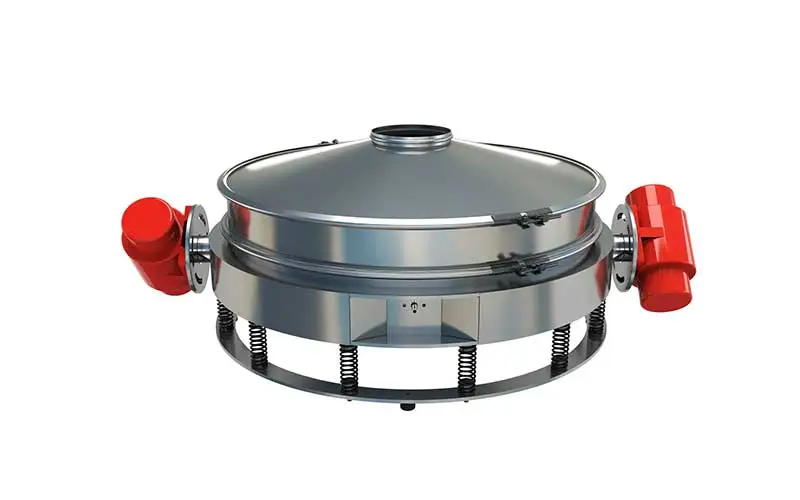
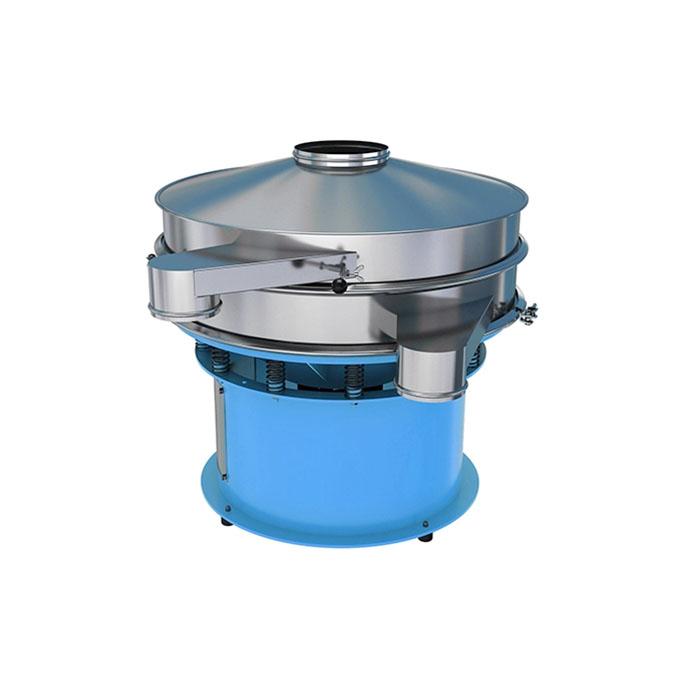
A round sieving machine, also called a circular vibro sieve or round separator, uses vibration to move powder across a circular screen. Fine particles pass through the mesh, while oversized particles are discharged from a separate outlet. The machine can be configured with one or multiple layers for different screening tasks.
Its compact footprint and flexible use make it suitable for powder feeding stations, mixing lines, packing lines, and quality-control screening before downstream processing.
Safety screening before packing or processing.
Particle classification into different sizes.
Removal of foreign matter or oversized particles.
Protection of mixers, grinders, conveyors, and packing machines.
Food Powder Applications
Food factories often use round sieving machines for flour, starch, sugar, milk powder, seasoning, protein powder, and additives. The key requirements are hygiene, easy cleaning, food-grade contact surfaces, and stable screening without excessive product loss.
Buyers should check whether the machine design avoids dead corners and whether screen replacement can be done quickly. For frequent product changes, cleaning time may be more important than maximum capacity. For equipment matching, compare the specifications on the powder sieving machine page before confirming specifications.
Stainless steel contact parts.
Easy screen removal and cleaning.
Dust-control connection options.
Gentle handling for fragile or light powders.
Pharma and Fine Chemical Applications
Pharma and fine chemical powders may require stricter control of contamination, particle size, and cleaning validation. A round sieving machine used in these applications should be selected according to contact material, surface finish, sealing design, and process environment.
For fine powders, mesh blinding can reduce efficiency. Anti-blinding systems, ultrasonic screening, or improved feeding control may be needed when powder is sticky, light, or electrostatic. For equipment matching, compare the specifications on the vibro sieve machine page before confirming specifications.
Confirm contact material and surface finish.
Evaluate sealing design and dust leakage control.
Consider ultrasonic or screen-cleaning options for fine powders.
How to Choose Mesh Size and Machine Diameter
Mesh size controls separation accuracy, while machine diameter affects screening area and capacity. A larger machine does not automatically solve every problem. If the powder does not flow well or blinds the mesh, the process may still need a special screen-cleaning system or feeding adjustment.
The best approach is to define target particle size, oversize percentage, expected capacity, and acceptable product loss. A supplier can then recommend diameter, layers, and motor configuration.
Fine mesh requires more attention to blinding and feeding rate.
High capacity may require a larger diameter or multiple units.
Multi-layer screening is useful when separating several grades.
Screen material should match abrasion and hygiene requirements.
Procurement Checklist
Before purchasing a round sieving machine, provide real material data instead of only the powder name. Two powders with the same name may behave differently due to moisture, fat content, particle shape, or static electricity.
For factories planning automation, confirm inlet height, outlet direction, and connection with conveyors, mixers, or packing machines. A good layout reduces manual handling and dust emission.
Material name, bulk density, and moisture level.
Required mesh size or particle size range.
Capacity per hour and working schedule.
Cleaning frequency and hygiene requirement.
Need for dust collection, vacuum feeding, or explosion-proof design.
Frequently Asked Questions
What is a round sieving machine used for?
It is used to remove impurities, classify particles, and protect downstream equipment in food, pharma, chemical, and industrial powder processing.
How do I choose the mesh size for powder sieving?
Choose mesh size based on target particle size and product quality requirement. For fine or sticky powders, also evaluate screen-cleaning systems and feeding control.
Can a round sieving machine be connected to a powder conveying system?
Yes. It can often be connected with vacuum conveying, pneumatic conveying, mixers, or packing machines, but inlet and outlet layout should be confirmed before production.
Get a Project-Based Recommendation
Share your powder sample data, mesh size, and capacity target to get a round sieving machine configuration for your process.
By Carson Zhao
The Founder of Tvtion Machinery Tech.
With more than 15 years of deep-rooted expertise in powder applications, I am Carson Zhao, the founder of Tvtion Machinery Tech, a company dedicated to delivering innovative and high-efficiency solutions for powder handling, mixing, screening, and processing across industries. My passion lies in solving complex powder-related challenges—whether in pharmaceuticals, food, chemicals, plastic, metal powder, etc. —by leveraging cutting-edge technology and hands-on industry experience.
Let's collaborate to transform your powder processes into a competitive advantage.
 EN
EN