V and double-cone blenders mix free-flowing powders by repeatedly dividing and recombining the bed as the vessel rotates. Their gentle action can suit fragile particles, but both may struggle with cohesive material, large density differences or very low-dose ingredients without additional controls.
A blender should be selected from blend uniformity, fill, segregation risk, charging/discharge, cleaning and scale-up—not nominal vessel volume.
Geometry and Mixing Behavior
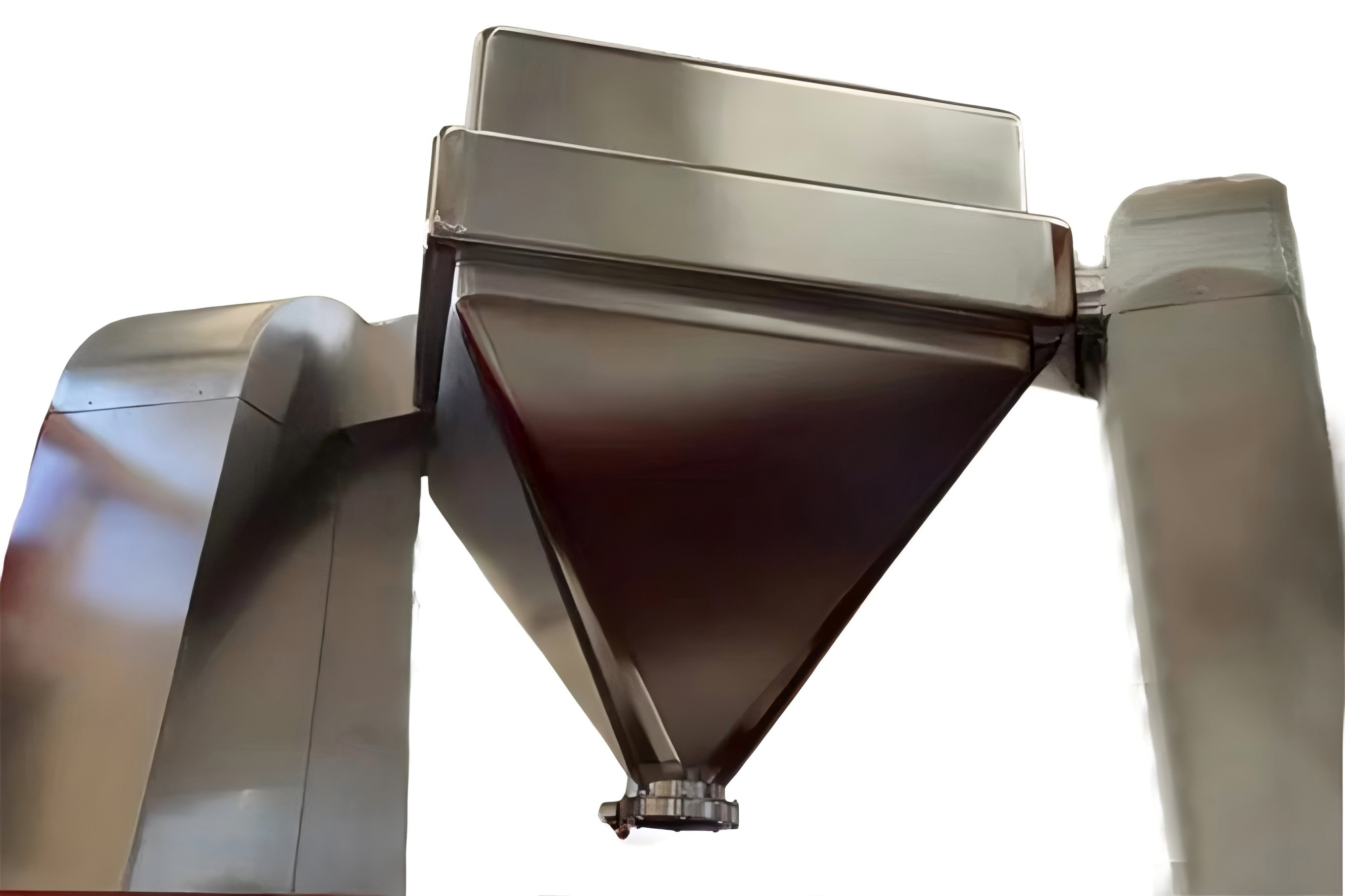
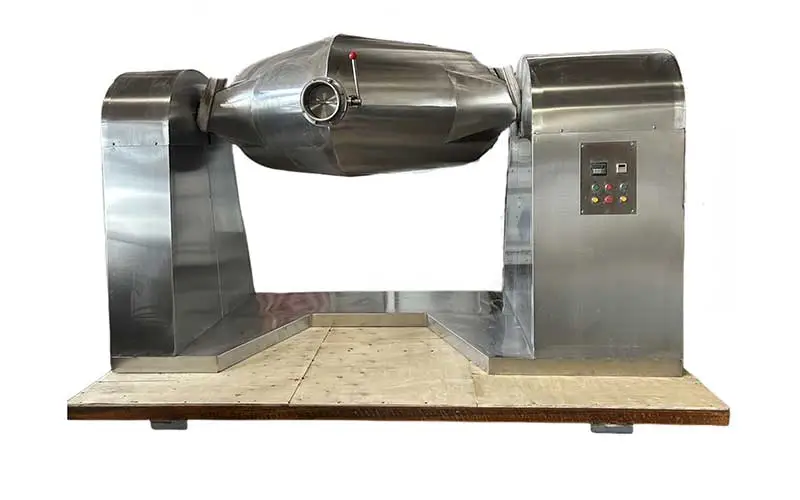
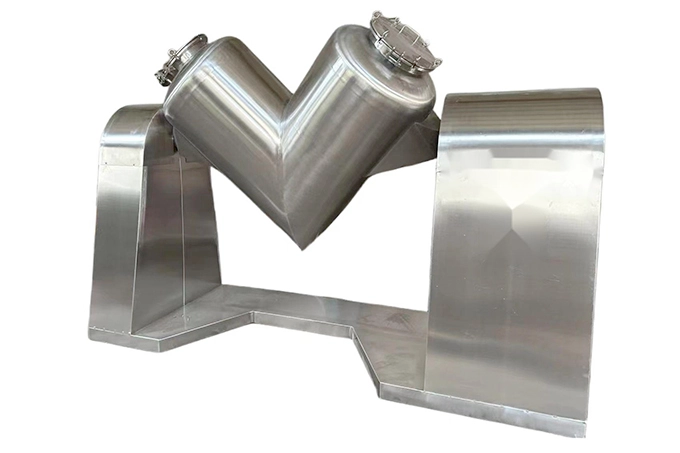
The two legs of a V vessel divide and merge the powder stream, creating repeated rearrangement. A double cone lifts and cascades the bed through a symmetric expanding/contracting volume. Baffles or an intensifier can alter behavior, but they also add shear, cleaning surfaces and validation work.
TVTION's V-shaped powder blender is best evaluated with free-flowing material and a defined fill ratio; the separate double-cone page should own that equipment cluster.
Selection Matrix
| Question | V blender consideration | Double cone consideration |
|---|
| Free-flowing blend | Strong division/recombination action | Gentle cascading action |
| Fragile particles | Generally low shear; verify impacts | Generally gentle; verify drop and discharge |
| Very low-dose active | Premix/addition strategy may be needed | Premix/addition strategy may be needed |
| Cleaning | Two legs and joint regions | Simple vessel but ports/baffles matter |
| Discharge | Outlet geometry and heel must be checked | Centered outlet can be convenient; segregation still possible |
Define Fill by Working Volume
Do not load to total geometric volume. The bed needs room to move, and the effective range depends on powder bulk density, angle of repose and vessel geometry. Underfilling can reduce interactions; overfilling restricts movement and lengthens blend time.
Quote batch mass with loose/tapped bulk density and fill range. For a product family, identify the lightest and densest recipes, not only an average powder.
Control Segregation Before and After Mixing
Reduce extreme particle-size or density differences where formulation permits.
Use a validated ingredient-addition order and location.
Define rotation speed and endpoint from samples, not time alone.
Minimize free fall and long transfer after blending.
Sample the discharge across early, middle and late fractions.
Align downstream hopper and packer design with segregation risk.
Cleaning, Containment and Scale-Up
Inspect welds, finish, seals, dead zones, access and cleaning validation. Potent, allergenic or colored products may require contained charging and discharge plus a defined carryover limit. Rotating guards and interlocks must follow site safety requirements.
Scale-up should preserve powder motion and fill behavior, then verify with blend-uniformity sampling. Equal revolutions or equal minutes do not automatically create the same result in a larger vessel.
Frequently Asked Questions
Which blender is better for cohesive powder?
Neither tumble design is automatically suitable. Cohesive feed may need an intensifier or a convective mixer, verified by testing.
What fill ratio should a V blender use?
Use the model’s validated working range for the actual bulk density and flow. Total vessel volume is not batch capacity.
Can a V blender mix liquids into powder?
Small additions may be possible with a designed spray/intensifier system, but agglomeration, cleaning and uniformity require trials.
How is blend uniformity tested?
Use a sampling plan and assay appropriate to the formulation, covering locations or discharge fractions and an agreed statistical criterion.
Test the Formula, Not Just the Machine
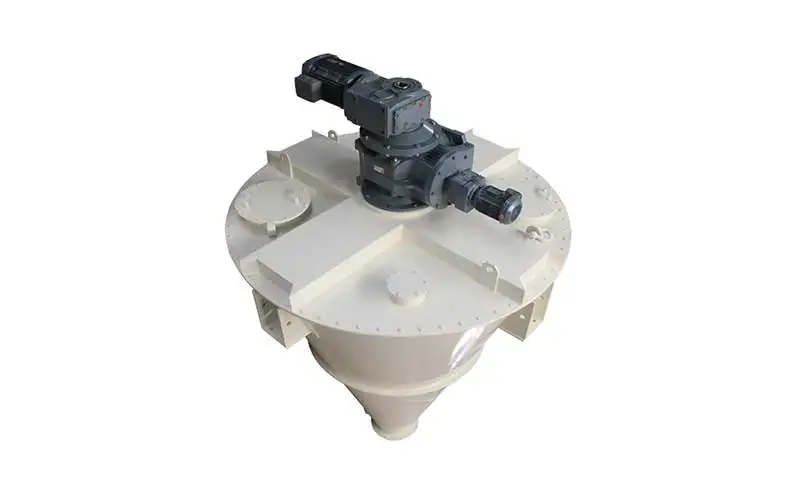
TVTION can compare V, double-cone, double screw conical mixer and other blender types based on powder properties and process goals. A representative trial should confirm batch mass, time, uniformity, discharge yield and cleaning.
By Carson Zhao
The Founder of Tvtion Machinery Tech.
With more than 15 years of deep-rooted expertise in powder applications, I am Carson Zhao, the founder of Tvtion Machinery Tech, a company dedicated to delivering innovative and high-efficiency solutions for powder handling, mixing, screening, and processing across industries. My passion lies in solving complex powder-related challenges—whether in pharmaceuticals, food, chemicals, plastic, metal powder, etc. —by leveraging cutting-edge technology and hands-on industry experience.
Let's collaborate to transform your powder processes into a competitive advantage.
 EN
EN